Easter Season Fasting and Abstinence Rules
Catholic fasting rules change significantly during the Easter season because the strict Lenten fast ends at the start of the Easter Vigil. While the 40 days of penance are complete, Catholics are still generally required to observe Friday abstinence from meat or perform another act of penance throughout the year, except when a Friday falls during the Easter Octave or on a Solemnity. In 2026, the Easter season begins on April 5 and continues for 50 days until Pentecost Sunday on May 24.
What are the fasting rules during the Easter season
Fasting rules during the Easter season are characterized by a shift from the penitential restrictions of Lent to the liturgical joy of the Resurrection, meaning the mandatory fast of one full meal and two smaller meals is no longer required. The Church teaches that the Easter season is a time of feasting rather than fasting, as we celebrate the victory of Christ over death. However, certain devotional practices and the universal requirement for Friday penance remain in a modified form.
During the 50 days of Easter, the Church does not impose a general fast on the faithful. This period, known as Paschaltide, is the longest liturgical season of the year, exceeding Lent by ten days. The primary rule to remember is that the Lenten fast and the personal sacrifices made during those 40 days officially conclude before the Easter Vigil begins. While many Catholics choose to continue certain healthy habits, the religious obligation to fast (which applied on Ash Wednesday and Good Friday) is lifted.
One fasting rule that remains strictly in place throughout the entire year, including the Easter season, is the Eucharistic fast. According to Canon 919 of the Code of Canon Law, those who are to receive the Most Holy Eucharist must abstain from any food or drink, with the exception of water and medicine, for at least one hour before Holy Communion. This is a matter of reverence for the Real Presence of Christ. Since the Easter season encourages frequent reception of the Eucharist, especially during the Octave, this remains a daily consideration for practicing Catholics.
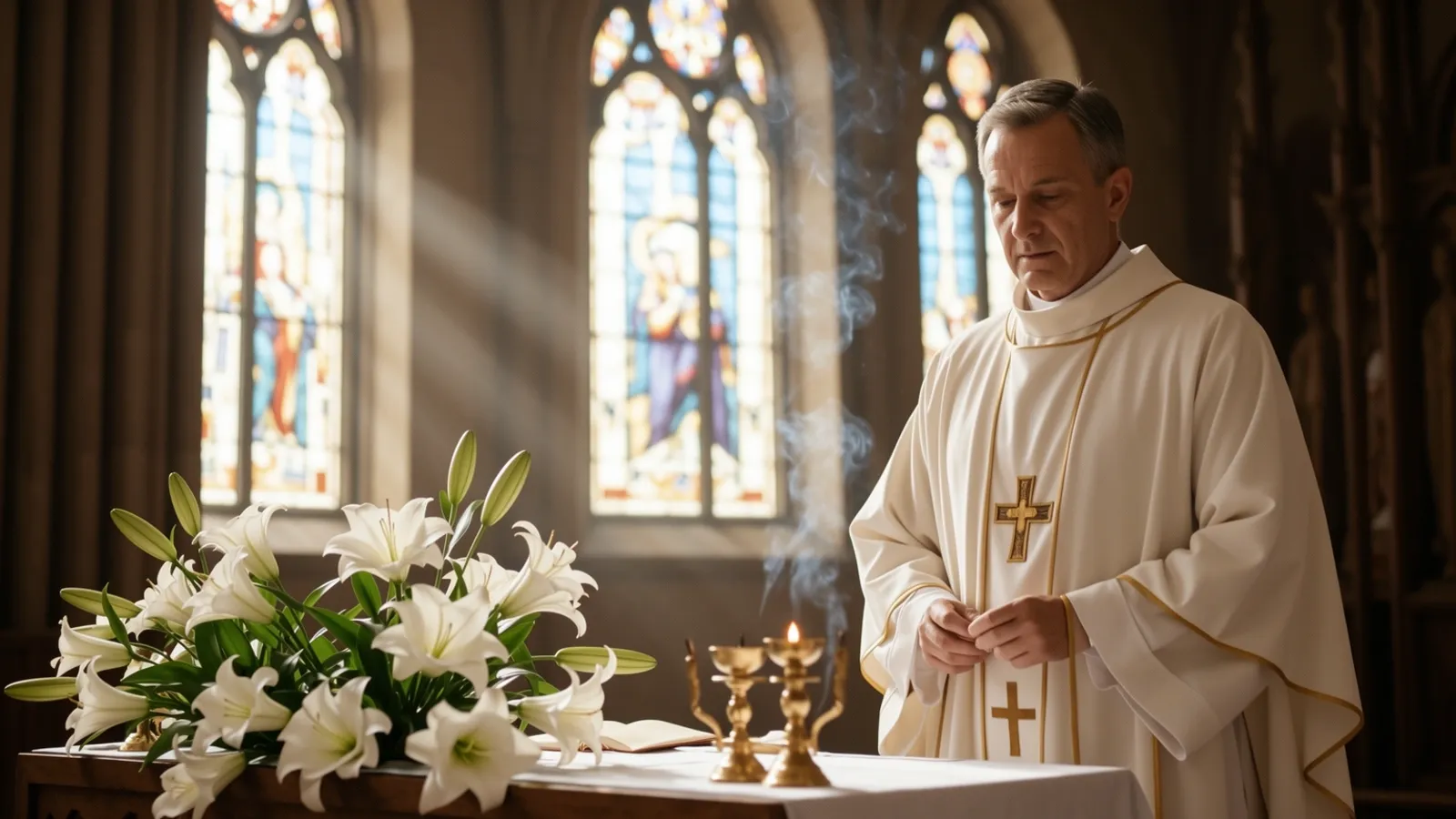
In the year 2026, Easter Sunday falls on April 5. From that morning until the evening of Pentecost on May 24, the spirit of the liturgy is one of celebration. This is reflected in the use of white vestments, the frequent singing of the Alleluia, and the absence of the traditional fast. The Church, in her wisdom, recognizes that the human spirit needs seasons of both penance and celebration to maintain a healthy spiritual life.
Does Friday abstinence apply during the Easter season
Friday abstinence from meat generally applies throughout the year, including the Easter season, unless a particular Friday is elevated to the status of a Solemnity. In many countries, such as the United States, the bishops' conference allows Catholics to substitute another form of penance for abstinence from meat on Fridays outside of Lent, but the underlying requirement for some form of Friday penance remains. This rule is intended to honor the day of the Lord's Passion even during seasons of joy.
According to Canon 1251, abstinence from meat, or from some other food as determined by the Episcopal Conference, is to be observed on all Fridays throughout the whole year, unless they should fall on a day listed as a Solemnity. This means that most Fridays during the Easter season still carry a penitential character. Catholics are called to remember that while we celebrate the Resurrection, we do so as a people who have been redeemed by the Blood of the Lamb shed on a Friday.
However, the Easter Octave provides a significant exception to this rule. Because each day of the Octave is liturgically celebrated as a Solemnity of the Lord, the requirement for abstinence or penance is completely lifted on the Friday of Easter Week. In 2026, this Friday falls on April 10. On this specific day, Catholics are encouraged to feast without the obligation of penance. After the Octave concludes, the standard Friday rules resume for the remainder of the 50 days of the season.
For Catholics who want to keep track of these liturgical shifts, using the calendar feature in the Prayla app can help identify which Fridays are Solemnities and which require penance. It is a common misconception that the joy of Easter cancels all penance; rather, the Church invites us to a balanced life where we never fully forget the cost of our salvation. Even in the light of the Resurrection, the Friday penance serves as a small, weekly act of solidarity with the suffering of Christ.
Why the Easter Octave is exempt from abstinence
The Easter Octave is exempt from the rule of Friday abstinence because the Church considers the first eight days of Easter to be a single, prolonged celebration of Easter Sunday. Every day within the Octave, from Easter Sunday to Divine Mercy Sunday, is treated as a Solemnity, which is the highest rank of liturgical feast. Since penance is legally and spiritually incompatible with a Solemnity, the obligation to abstain from meat or perform other penance on the Friday of the Octave is removed.
To understand this, one must look at how the Church structures time. The What Is the Octave of Easter guide explains that an octave allows the faithful to dwell deeply on a profound mystery of the faith that cannot be exhausted in a single day. The Council of Trent (1545-1563) and subsequent liturgical reforms have maintained the importance of the Octave as a way to extend the "Day which the Lord has made."
Liturgically, the Mass readings and the Divine Office during these eight days carry the same weight as Easter Sunday itself. The Gloria is sung daily, and the double Alleluia is added to the dismissal. Because a Solemnity is a day of spiritual feasting, the Code of Canon Law (Canon 1251) explicitly states that the law of abstinence does not apply on these days. This is a moment where the Church commands us, in a sense, to put aside our mourning and enter fully into the banquet of the Kingdom.
This is the day which the Lord has made; let us rejoice and be glad in it. Psalms 118:24
In the history of the Church, the Octave was also the time when the newly baptized, known as neophytes, would wear their white baptismal robes and receive daily instruction in the mysteries of the faith. Their joy was shared by the whole community. To fast or abstain during such a week would be contrary to the spirit of the New Covenant and the victory of Christ. In 2026, the Octave runs from April 5 to April 12, and Catholics can enjoy the Friday of that week, April 10, as a day of full celebration.
The historical development of Easter fasting
The history of Easter fasting reveals that the early Church practiced a very intense fast leading up to the feast, but strictly forbade fasting during the 50 days of the Easter season. As early as the second and third centuries, Church Fathers like St. Irenaeus and Tertullian noted that the Paschal season was a time of standing in prayer rather than kneeling, and of feasting rather than fasting. This was to symbolize the joy of the Resurrection and the anticipation of the heavenly banquet.
In the primitive Church, fasting was often seen as a sign of waiting for the Bridegroom. Once the Bridegroom had risen, the fast was broken. The Council of Nicaea (325 AD) further solidified the celebratory nature of the 50 days, ensuring that the liturgical practices reflected the theology of the Resurrection. During this period, any form of public penance was suspended, and even the customary fasts on Wednesdays and Fridays were often relaxed in many regions to honor the "Great Sunday" of the 50 days.
Comparison of Fasting Rules by Era
| Era | Lenten Fast Length | Easter Season Friday Rules | Primary Authority |
|---|---|---|---|
| Early Church | Varied (2-40 days) | No fasting or kneeling | Apostolic Tradition |
| Medieval Period | 40 days (strict) | No fasting in Octave; penance resumed | Local Synods |
| 1917 Code | 40 days (one meal) | Abstinence required on all Fridays | Canon Law 1917 |
| Modern (1983) | 40 days (two days mandatory) | Abstinence or substitution | Canon Law 1983 |
By the time of the 1917 Code of Canon Law, the rules had become more structured. The 1917 Code required abstinence on all Fridays of the year, but exempted Holy Days of Obligation. Interestingly, the Friday of the Easter Octave was not always a Holy Day of Obligation, but the liturgical rank of the day still influenced how it was observed. The current 1983 Code of Canon Law simplified these requirements, making it clear that any Solemnity, including every day of the Easter Octave—removes the obligation of penance.
The evolution of these rules shows a consistent desire by the Magisterium to protect the integrity of the liturgical seasons. The Church ensures that we do not become so habituated to penance that we forget how to celebrate, nor so habituated to feasting that we forget the necessity of the Cross. This historical perspective helps us appreciate the 1.39 billion Catholics today who follow these same ancient rhythms of the soul.
The difference between fasting and abstinence
It is essential to distinguish between fasting and abstinence to understand the Easter rules correctly, as fasting refers to the quantity of food consumed, while abstinence refers to the type of food avoided. During the Easter season, the laws of fasting are entirely absent (except for the one-hour Eucharistic fast), while the laws of abstinence from meat remain the standard for Fridays outside of the Octave. This distinction ensures that even when we are not strictly "fasting," we are still practicing self-denial in small ways.
Fasting is the religious practice of limiting the number of meals. In the current law of the Church, fasting consists of eating only one full meal, with two smaller meals that together do not equal the full meal. This is only mandatory on Ash Wednesday and Good Friday for those aged 18 to 59. Since neither of these days falls within the Easter season, the obligation to fast does not exist during Paschaltide.
Abstinence, on the other hand, is the act of refraining from eating meat (the flesh of warm-blooded animals such as beef, pork, and poultry). This applies to all Catholics aged 14 and older. While the 1983 Code of Canon Law (Canon 1251) establishes Friday as a day of abstinence, it allows for the substitution of other penances in many regions. During the Easter season, Catholics should check their local bishop's guidelines. For example, in the United States, the USCCB has allowed the substitution of another penance, such as extra prayer or an act of charity, on Fridays outside of Lent.
If you are unsure how to fulfill your Friday penance, the catholic-fasting-rules guide provides a comprehensive breakdown of these definitions. Understanding these terms prevents scrupulosity and helps the faithful live the liturgical year with clarity. During Easter, we are released from the "burden" of fasting, but we are never released from the call to be a people of prayer and temperate living.
Why Catholics stop fasting after the Easter Vigil
Catholics stop fasting after the Easter Vigil because the Resurrection of Jesus Christ marks the definitive victory over sin and death, transforming the season of mourning into a season of wedding-like celebration. In the Gospels, Jesus specifically addressed why His disciples did not fast while He was with them, comparing Himself to a bridegroom. The Easter season is the time when the Church, the Bride, celebrates the presence of her Risen Lord.
And Jesus said to them, "Can the wedding guests fast while the bridegroom is with them? As long as they have the bridegroom with them, they cannot fast." Mark 2:19
The Easter Vigil is the "Mother of all Vigils," where the Church keeps watch for the Resurrection. When the Gloria is intoned and the bells are rung, the penitential character of Lent is shattered. The Resurrection is not just a historical event we remember; it is a current reality that changes our relationship with God. Fasting is a sign of longing and lack, but in the Resurrection, we find the fulfillment of all our desires. Thus, to continue a mandatory fast would be to ignore the reality of Christ's triumph.
St. John Chrysostom, in his famous Paschal Homily which is read in many Byzantine and some Roman Catholic contexts, invites everyone to the feast. He says, "The table is full-laden; feast ye all sumptuously. The calf is fatted; let no one go hungry away." This homily captures the essence of why fasting ends. The "fatted calf" has been prepared, and the Church invites her children to eat and be glad.
Furthermore, the 50 days of Easter are a foretaste of the Kingdom of Heaven, where there will be no more hunger or thirst. By setting aside fasting, we act out our hope in the eternal banquet. This practice is deeply rooted in the Catechism of the Catholic Church, which teaches that the Sunday Eucharist, and by extension the Easter season—is a participation in the heavenly liturgy (CCC 1090). We feast because we have been saved, and we rejoice because the gates of Paradise are open.
Friday penance according to Canon Law 1249 to 1253
Canon Law 1249 to 1253 establishes the framework for all days of penance in the Church, identifying every Friday of the year as a day when the faithful are to devote themselves in a special way to prayer and works of charity. While the Easter season is a time of joy, the law of the Church remains consistent that Friday is a penitential day. However, the law also provides the necessary flexibility for bishops' conferences to adapt these rules to local cultures and for Solemnities to take precedence.
Canon 1249 states that all Christ's faithful are bound by divine law to do penance. This is not a human invention but a response to the Gospel call for repentance. To ensure a common practice, the Church designates certain days, such as Fridays, for this purpose. This communal aspect of penance is important; it reminds us that we are part of the Mystical Body of Christ. When we abstain or perform penance together, we witness to the world our shared commitment to the Cross.
Canon 1253 is particularly relevant for the Easter season outside of the Octave. It gives the conference of bishops the authority to substitute the obligation of fast and abstinence with other forms of penance. In 1966, the National Conference of Catholic Bishops in the United States issued a decree stating that while they strongly recommended the traditional Friday abstinence from meat, it was no longer binding under pain of sin outside of Lent. Instead, Catholics were urged to choose a penance that best suited their spiritual needs.
Summary of Penitential Obligations (Canon 1250-1251)
| Type of Day | Mandatory Practice | Who is Bound |
|---|---|---|
| All Fridays (Yearly) | Abstinence from meat (or substitution) | Ages 14+ |
| Ash Wednesday | Fasting and Abstinence | Fasting (18-59), Abstinence (14+) |
| Good Friday | Fasting and Abstinence | Fasting (18-59), Abstinence (14+) |
| Solemnities | None (Feasting encouraged) | No one |
This legal structure ensures that the Church remains a house of prayer and discipline. Even during the 50 days of Easter, the Friday penance acts as a spiritual anchor. It prevents the joy of the season from turning into mere worldly indulgence. By following these rules, Catholics learn to integrate the suffering of the Friday with the joy of the Sunday, a balance that is essential for the Christian life. For those seeking to deepen their understanding of these rules, reading How Often Should Catholics Go to Confession can provide context on the broader life of penance and reconciliation.
Saints who modeled the joy of the Easter season
Many saints have provided a beautiful example of how to live the Easter season with a spirit of joy that transcends the need for fasting. These saints understood that the Christian life is not only about the sorrow of the Cross but also about the victory of the empty tomb. They often replaced their Lenten austerities with acts of intense charity and communal celebration, showing that holiness is found in both the fast and the feast.
St. Philip Neri, known as the "Apostle of Joy," was famous for his cheerful disposition and his ability to make religion attractive to the people of Rome. He often said, "A heart filled with joy is more easily made perfect than one that is sad." During the Easter season, he would lead groups on "Seven Church Walks," which were pilgrimages filled with singing and lighthearted fellowship. He demonstrated that once the Lenten penance was over, the soul should expand in gratitude and happiness.
St. Augustine, a Doctor of the Church, famously emphasized the singing of the Alleluia during the Easter season. He taught that while Lent represents the trials of this life, the Easter season represents the happiness of the life to come. He encouraged the faithful to "Sing and walk!" toward their heavenly home. Augustine did not see the end of fasting as a license for gluttony, but as a time to feast on the Word of God and the joy of the community.
St. Francis de Sales also wrote extensively about the "spirit of liberty" that should characterize the child of God. He taught that we should not be so attached to our penances that we cannot set them aside when the Church asks us to celebrate. In his Introduction to the Devout Life, he suggests that true devotion is adaptable. If a friend invites you to a meal during the Easter season, you should accept with joy and charity, rather than clinging to a private fast that might cause offense or pride.
These saints show us that the end of fasting is an invitation to a different kind of discipline: the discipline of gratitude. Using the saints section of Prayla can help you find more examples of holy men and women who navigated the rhythm of the liturgical year with grace. Their lives remind us that the goal of every fast is to prepare the heart for the eternal feast of the Lamb.
Common misconceptions about Easter eating rules
Several misconceptions exist regarding what Catholics can and cannot eat during the Easter season, often leading to either excessive scrupulosity or total negligence. One common error is the belief that because Lent is over, all forms of Friday penance are abolished until next year. As we have seen from Canon Law, this is not true; Friday remains a day of penance, though its expression may change depending on local episcopal rules and the liturgical rank of the day.
Another misconception is that the Easter Octave only lasts for Easter Sunday and Monday. In reality, the Octave is a full eight-day period, and the exemption from abstinence applies specifically to the Friday within that week. Some Catholics mistakenly believe they must continue their Lenten "gives-ups" (like chocolate or alcohol) until Pentecost. While one is free to continue a healthy habit, these are private devotions and are not required by the Church. In fact, if a private penance makes a person irritable or prevents them from sharing in the joy of the season, it may be better to set it aside.
Some people also confuse the Eucharistic fast with Lenten fasting. They might think that because it is Easter, they don't need to fast for an hour before Mass. However, the Eucharistic fast is a permanent rule of the Church intended to prepare the body and soul for the reception of Christ. It is a small but significant sacrifice that we make every time we approach the altar, regardless of the liturgical season.
Finally, there is the misconception that the Easter season is a time for unrestricted indulgence. While we are not fasting, the virtue of temperance still applies. The Church encourages feasting, but feasting in a Christian sense is a celebration of God's gifts, not a descent into gluttony. True Easter joy is found in the 5 Catholic Prayers for the Easter Season and in the communal life of the Church, not merely in the abundance of food. Correcting these misunderstandings helps us live the season with the "sober intoxication" of the Spirit that the Church Fathers often spoke of.
Practical application for families and individuals
Living the Easter season's rules for fasting and abstinence requires a deliberate shift in mindset from the "desert" of Lent to the "garden" of the Resurrection. This can be achieved by applying the Church's guidelines at different levels of spiritual maturity. Whether you are a beginner or a long-time practitioner, the goal is to make the 50 days of Easter a time of visible, tangible joy that reflects your faith in the Risen Christ.
Levels of Easter Observance
- Beginner: Focus on the basics. Ensure you do not fast during the Easter Octave (April 5-12, 2026). On the Fridays following the Octave, either abstain from meat or perform a simple alternative penance, such as a decade of the Rosary or an extra five minutes of Scripture reading. Always observe the one-hour Eucharistic fast before Mass.
- Intermediate: Deepen your liturgical awareness. Celebrate each Friday of the Easter season by attending daily Mass or praying the Regina Caeli at noon. Make a conscious effort to improve your Friday penance by choosing something that truly turns your heart back to God, such as visiting the sick or donating to a local food bank, while still enjoying the festivity of the other days of the week.
- Advanced: Incorporate the Liturgy of the Hours or the Liturgy of the Hours into your daily routine. Practice the "discipline of joy" by hosting small gatherings or festive meals for family and friends, explicitly mentioning the Resurrection. On Fridays, consider a more traditional abstinence from meat as a way to stand in solidarity with the universal Church, while maintaining an interior spirit of Easter praise.
For families, this is an excellent time to teach children the difference between the "purple" days of Lent and the "white" days of Easter. You might decorate the dining table with white linens and flowers and explain why we are having a special treat on a Friday during the Octave. This makes the faith come alive as a lived experience rather than a set of abstract rules. By using the What Does the Bible Say About the Eucharist resources, you can also explain to your children why we fast for an hour before receiving Jesus, connecting the physical act to the spiritual reality.
The significance of Friday penance during Eastertide
Maintaining a form of Friday penance during Eastertide, outside of the Octave—serves as a vital reminder that the Resurrection does not erase the Cross, but rather gives it its ultimate meaning. In the Catholic worldview, the mysteries of Christ's life are interconnected. We cannot have the empty tomb without the hill of Calvary. By continuing a small act of penance on Fridays, we keep our spiritual life grounded in the reality of the price paid for our redemption.
This practice also prepares us for the Friday of each week, which is a "mini-Lent" just as every Sunday is a "mini-Easter." Even in the most joyful seasons, the Church never completely abandons the penitential spirit. This is seen in the Mass itself, where the Kyrie Eleison (Lord, have mercy) is still prayed. Penance is not just about being "sorry" for sins; it is about the ongoing conversion of the heart, a process that continues until we reach the heavenly kingdom.
Moreover, Friday penance during the Easter season acts as a bridge to the coming of the Holy Spirit at Pentecost. In the final days of the season, the Church often looks back to the upper room where the Apostles were praying and waiting. A bit of self-denial helps us to stay alert and "watch and pray," as our Lord commanded. It ensures that our Easter joy is spiritual and not merely emotional or physical.
For if we have been united with him in a death like his, we shall certainly be united with him in a resurrection like his. Romans 6:5
Ultimately, the rules of the Church are designed to help us become more like Christ. He is the one who fasted in the desert and feasted with sinners, who died on a Friday and rose on a Sunday. By following the rhythmic laws of fasting and abstinence, we participate in the very life of the Savior. We learn that there is a time for everything under heaven: a time to weep and a time to laugh, a time to mourn and a time to dance.
The role of the Eucharist in Easter celebration
The Eucharist is the center of the Easter season, and the rules surrounding its reception are the most important "eating rules" for a Catholic to follow. During these 50 days, the Church encourages the faithful to receive Holy Communion frequently, provided they are in a state of grace. This is the period of the "Easter Duty," the requirement for every Catholic to receive the Eucharist at least once between Ash Wednesday and Trinity Sunday.
To receive the Eucharist worthily, one must observe the Eucharistic fast and, if conscious of mortal sin, go to the Sacrament of Confession first. You can learn How to Make a Good Confession if it has been a while since your last visit. The fast of one hour is a small sacrifice compared to the gift we receive. It creates a physical "hunger" that points to our spiritual hunger for the Bread of Life.
In 2026, many Catholics will celebrate Divine Mercy Sunday on April 12, which concludes the Easter Octave. This day is a profound opportunity to receive the Eucharist and experience the fullness of God's forgiving love. The Church teaches that the Eucharist is the "source and summit of the Christian life" (CCC 1324), and this is never truer than during the Easter season. Our feasting on earthly food is meant to be a reflection of our feasting on the Body and Blood of Christ.
The 1966 USCCB Decree on Friday Penance
In 1966, the bishops of the United States issued a pastoral statement regarding Friday penance. They noted: "Friday should be in each week something of what Lent is in the entire year. For this reason, we urge all to prepare for that day by more frequent use of the sacrament of penance and by more intensive prayer. ... we emphasize that our people are henceforth free from the obligation of abstinence from meat on Fridays of the year, outside of Lent, but we also emphasize that they should replace this ancient practice with another form of voluntary penance."
Liturgical colors and their relation to fasting
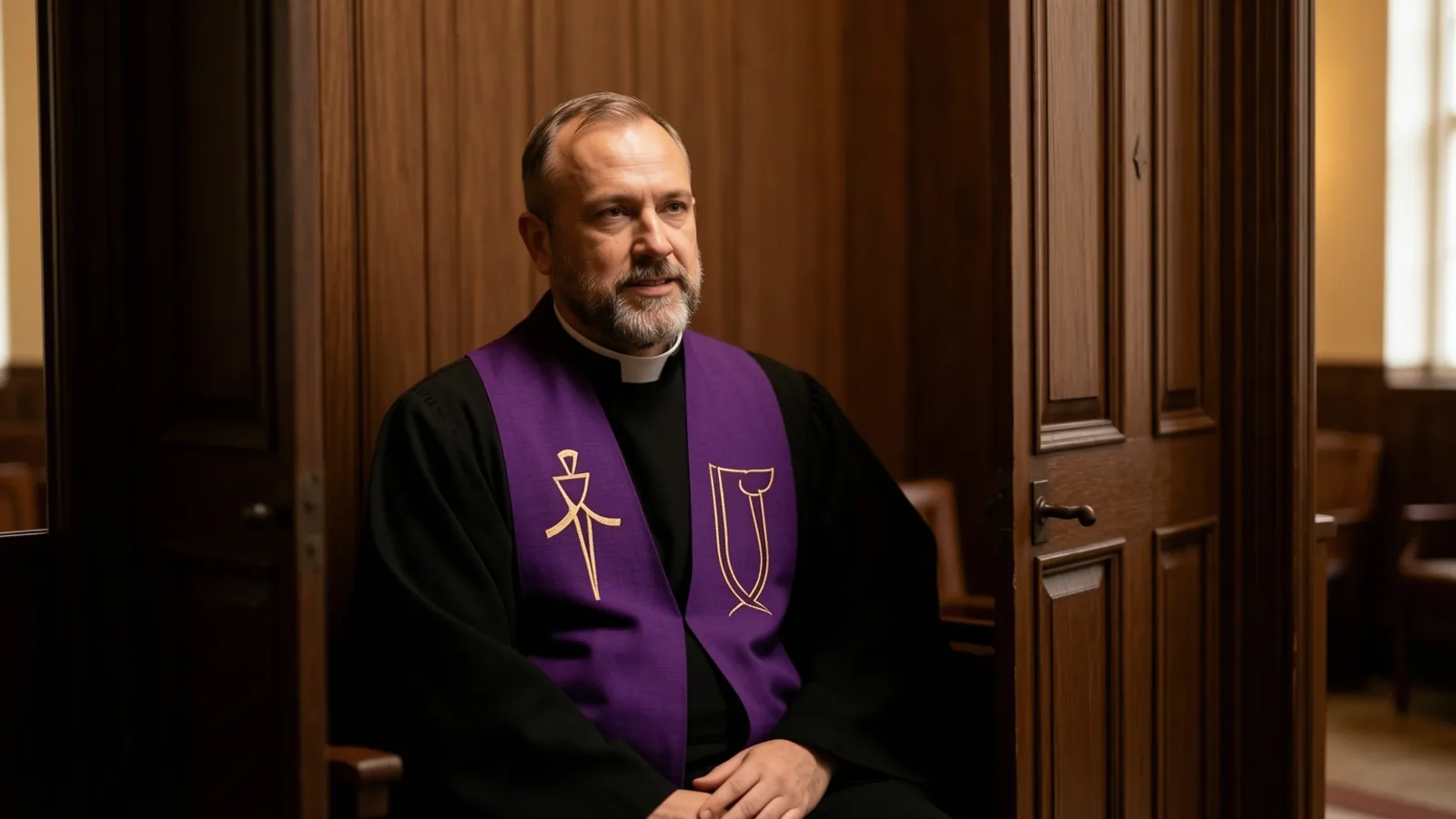
The liturgical colors used during the Easter season, primarily white and gold—signify the end of the penitential season of Lent and the arrival of the light of Christ. In the Roman Rite, color is not merely decorative; it is a visual catechism that instructs the faithful on the character of the season. Purple, the color of Lent, is associated with penance, fasting, and preparation. White, used throughout the 50 days of Easter, is the color of purity, joy, and the Resurrection.
When we see the priest wearing white vestments, it is a signal to our senses that the time of mandatory fasting has passed. White is the color of the angels at the tomb and the garments of the transfigured Christ. It reminds us of our own baptismal innocence and the glory that awaits us. For the 1.39 billion Catholics around the world, this visual change is a powerful reminder that we are a people of the Light.
During the Easter season, the only time the color changes significantly is for the feast of Pentecost, when red is worn to symbolize the fire of the Holy Spirit. Even then, the spirit of the season remains one of fulfillment rather than lack. If you find yourself in a church and see white vestments on a Friday, it is a reminder that you are in a season of grace. The Church uses every means possible, color, sound, and even our dietary habits—to bring us closer to the mystery of God's love. By aligning our physical practices with the liturgical colors and seasons, we allow the faith to permeate every aspect of our lives.
Prayer
Queen of Heaven, rejoice, alleluia. For He whom you did merit to bear, alleluia. Has risen, as he said, alleluia. Pray for us to God, alleluia. Rejoice and be glad, O Virgin Mary, alleluia. For the Lord has truly risen, alleluia. O God, who gave joy to the world through the resurrection of Thy Son, our Lord Jesus Christ, grant we beseech Thee, that through the intercession of the Virgin Mary, His Mother, we may obtain the joys of everlasting life. Through the same Christ our Lord. Amen.
Further Reading
- Catechism of the Catholic Church, paragraphs 1387, 1438, 2043
- Code of Canon Law, Canons 1249-1253
- Apostolic Constitution Paenitemini (1966) by Pope Paul VI
- USCCB Pastoral Statement on Penance and Abstinence (1966)
- General Instruction of the Roman Missal, Chapter VIII