How to Pray the Rosary
To pray the rosary, you begin with the Sign of the Cross, recite the Apostles' Creed, one Our Father, three Hail Marys, and one Glory Be. You then announce the first Mystery, pray one Our Father, ten Hail Marys while meditating on the life of Christ, and one Glory Be, repeating this for five decades. This traditional Catholic prayer allows the faithful to contemplate the Gospel through the intercession of the Blessed Virgin Mary.
The History and Theology of the Rosary
The Rosary is a traditional Catholic devotion that combines vocal prayer with mental meditation on the life, death, and resurrection of Jesus Christ. According to pious tradition, the Blessed Virgin Mary appeared to St. Dominic in 1214 and gave him the Rosary as a spiritual weapon to combat the Albigensian heresy. This apparition took place in the forest of Bouconne, near Toulouse, France. Before this time, monks and clergy recited the 150 Psalms of the Bible as part of the Divine Office. Laypeople who could not read often substituted 150 repetitions of the Our Father or the Hail Mary to mirror this monastic practice, which became known as the Psalter of the Laity.
The word rosary comes from the Latin word rosarium, which means a garden of roses or a crown of roses. Each Hail Mary is considered a spiritual rose offered to the Mother of God. The Church teaches that the Rosary is a powerful means of grace and a way to grow in holiness. In the Catechism of the Catholic Church, we are taught that meditation is a prayerful quest engaging thought, imagination, emotion, and desire (CCC 2708). The Rosary provides a structured framework for this meditation. By repeating the prayers, the mind is freed to contemplate the specific mysteries of the faith without being distracted by the need to compose new words.
Pope St. Pius V standardized the Rosary in the 16th century via the papal bull Consueverunt Romani Pontifices in 1569. He credited the Rosary for the miraculous victory of the Christian fleet over the Ottoman Empire at the Battle of Lepanto in 1571. Today, there are approximately 1.39 billion Catholics worldwide who have access to this devotion. It is not merely a Marian prayer; it is a Christocentric prayer that leads the soul to a deeper understanding of the Incarnation and the Redemption. When we pray the Rosary, we see the life of Jesus through the eyes of His mother, who was his first and most perfect disciple.
The Physical Structure of the Rosary Beads
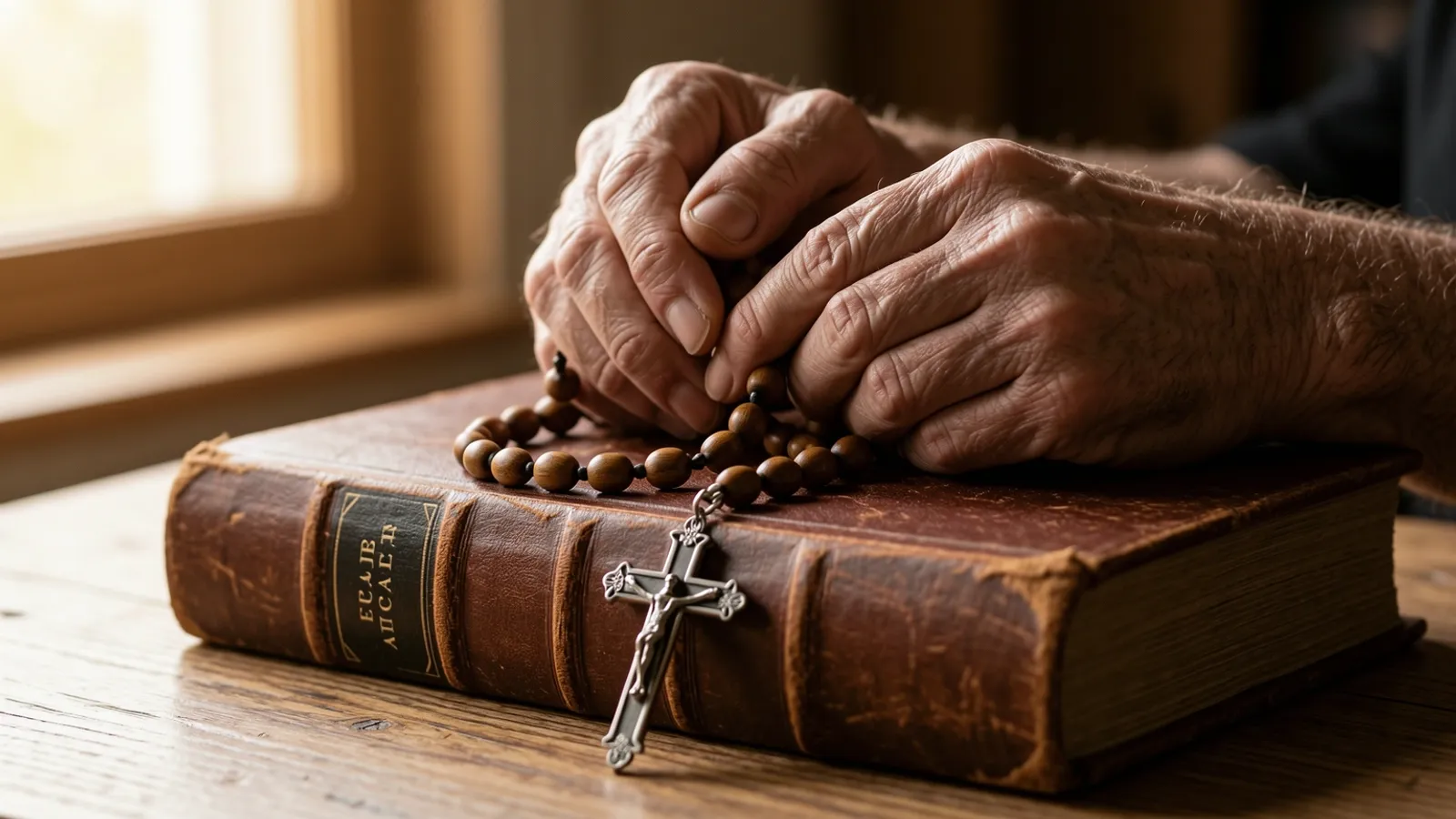
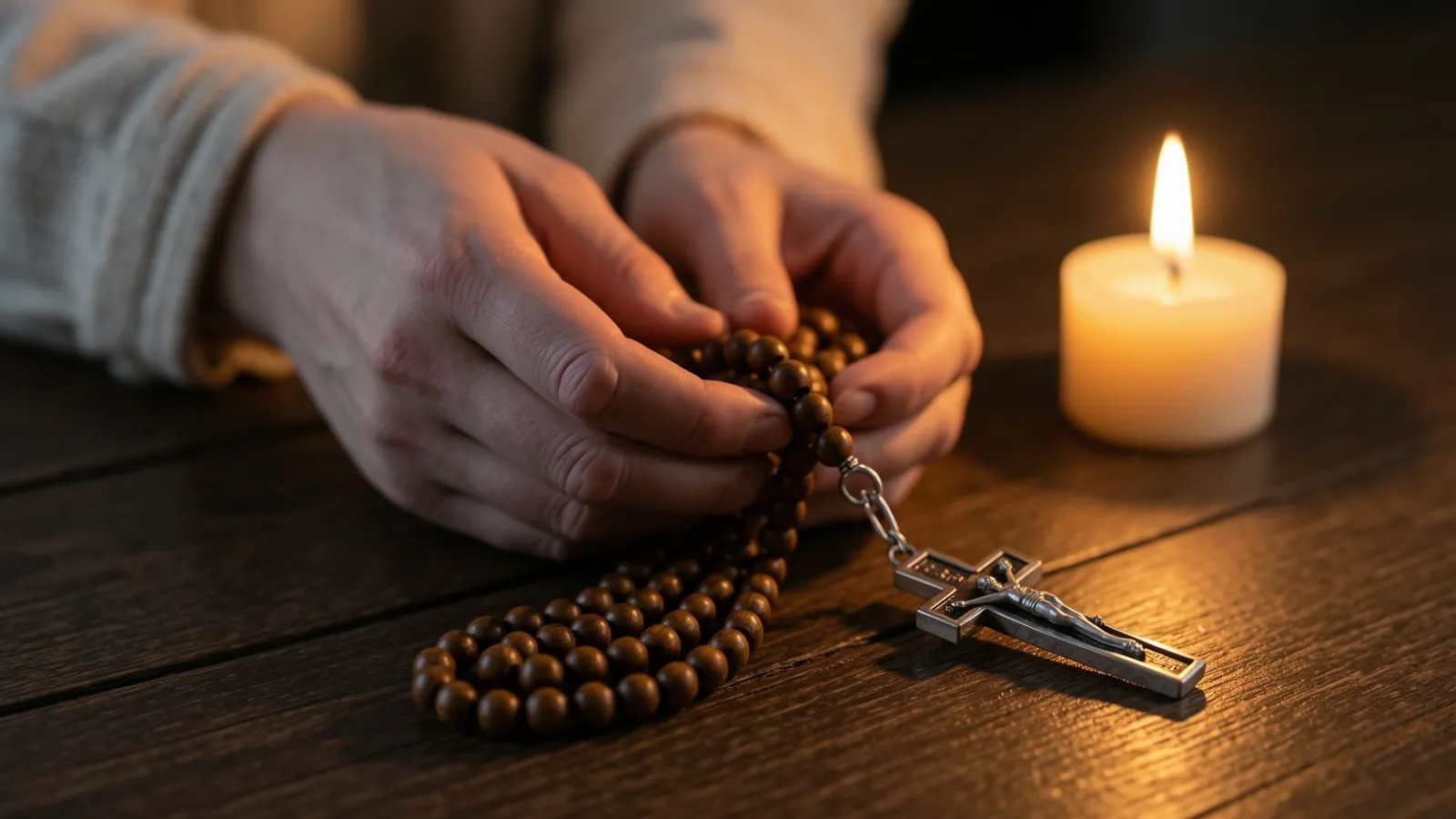
A standard Dominican rosary consists of a loop of 59 beads, a crucifix, and a pendant section. The crucifix is the starting point, representing the central mystery of the Christian faith: the sacrifice of Jesus on the Cross. Following the crucifix is a single large bead, three smaller beads, and another large bead. This initial section is used for the introductory prayers, including the Apostles' Creed, which serves as a profession of faith before entering into the meditative decades.
The main loop of the rosary contains five decades. Each decade is composed of ten small beads, representing ten Hail Marys, preceded by one large bead representing the Our Father. These large beads are often called divider beads or spacer beads. In many traditional rosaries, the large beads are made of a different material or shape to help the person praying keep their place without needing to look at the beads. This is particularly useful when praying in the dark or during a quiet moment in bed.
| Bead Type | Prayer Recited | Quantity |
|---|---|---|
| Crucifix | Apostles' Creed | 1 |
| Large Bead | Our Father | 6 |
| Small Bead | Hail Mary | 53 |
| Total Beads | 59 |
In addition to the standard five-decade rosary, there are other variations used within the Church. The Franciscan Crown consists of seven decades, focusing on the seven joys of Mary. The Servite Rosary has seven sets of seven beads to honor the seven sorrows of Mary. However, the five-decade Dominican rosary remains the most common and widely recognized form. Using the beads is a tactile way to keep track of the prayers, allowing the soul to focus entirely on the mysteries of Christ. Many Catholics choose to carry their rosary in their pocket as a constant reminder of the need for prayer and the protection of the Blessed Virgin. You can find detailed guides on how to use these beads in the Prayla Rosary section.
The Essential Prayers of the Rosary
The Rosary is composed of several foundational Catholic prayers, most of which are rooted directly in Sacred Scripture. The Apostles' Creed is a summary of the faith that dates back to the early Church. It establishes the theological ground upon which the meditation rests. The Our Father, also known as the Lord’s Prayer, was given to us by Jesus Himself when the Apostles asked Him how to pray. This prayer is found in the Gospel of Matthew 6:9-13.
The Hail Mary is the heart of the Rosary. The first half of the prayer is composed of two biblical greetings. The first is the greeting of the Angel Gabriel at the Annunciation: "Hail, full of grace, the Lord is with thee" (Luke 1:28). The second is the greeting of Elizabeth at the Visitation: "Blessed art thou among women, and blessed is the fruit of thy womb" (Luke 1:42). The second half of the prayer, "Holy Mary, Mother of God, pray for us sinners, now and at the hour of our death," is a petition added by the Church, asking for the intercession of the Theotokos.
Hail, full of grace, the Lord is with thee: blessed art thou among women. Luke 1:28
The Glory Be is a short doxology that gives praise to the Holy Trinity, affirming the equality of the Father, the Son, and the Holy Spirit. Finally, the Fatima Prayer is often added after the Glory Be at the end of each decade. This prayer was requested by the Blessed Virgin Mary during her third appearance at Fatima, Portugal, on July 13, 1917. It emphasizes the need for mercy and the salvation of souls from the fires of hell. Understanding these prayers is essential for any rosary guide for beginners. Each word serves to orient the heart toward the divine reality of God's love.
How to Pray the Rosary Step by Step
Learning how to pray the rosary is a simple process that becomes second nature with regular practice. Follow these steps to pray the rosary to ensure you are following the traditional sequence.
- Make the Sign of the Cross and recite the Apostles' Creed while holding the crucifix.
- Pray the Our Father on the first large bead.
- Pray three Hail Marys on the next three small beads. These are traditionally offered for the virtues of Faith, Hope, and Charity.
- Pray the Glory Be on the space before the next large bead.
- Announce the First Mystery (e.g., "The First Joyful Mystery, the Annunciation") and pray the Our Father on the large bead.
- Pray ten Hail Marys on the ten small beads while meditating on the mystery.
- Pray the Glory Be and the Fatima Prayer at the end of the decade.
- Repeat steps 5 through 7 for the second, third, fourth, and fifth mysteries.
- Pray the Hail Holy Queen (Salve Regina) after completing the five decades.
- Finish with the Sign of the Cross.
It is common to add a concluding prayer, such as the Rosary Prayer ("O God, whose only-begotten Son..."), which summarizes the purpose of the devotion. When praying in a group, a leader usually announces the mystery and prays the first half of each prayer, while the congregation responds with the second half. This communal rhythm creates a powerful atmosphere of shared faith. If you are praying alone, you may find it helpful to use the Prayla prayer library to follow along with the text.
Developing a consistent habit is the most important part of this process. It is better to pray one decade with deep focus than to rush through five decades without any meditation. The beads are a tool to help you stay present with Christ. As you move from bead to bead, imagine yourself walking alongside Mary through the events of her Son's life. This mental journey is the core of the rosary prayers and the reason the devotion is so spiritually fruitful.
The Joyful Mysteries
The Joyful Mysteries focus on the Incarnation and the early life of Jesus. They are traditionally prayed on Mondays and Saturdays. These mysteries invite the faithful to contemplate the humility and obedience of Mary, as well as the great joy of God becoming man. The first mystery is the Annunciation, where the Angel Gabriel asks Mary to be the Mother of God. The second is the Visitation, where Mary visits her cousin Elizabeth. The third is the Nativity, the birth of our Lord in Bethlehem. The fourth is the Presentation, where Mary and Joseph bring Jesus to the Temple. The fifth is the Finding of Jesus in the Temple after He was lost for three days.
Meditation on the Annunciation
In the Annunciation, we see the perfect example of human cooperation with divine grace. Mary's fiat ("Let it be done to me according to thy word") is the moment the Word became flesh. When meditating on this mystery, we should pray for the virtue of humility. We ask Mary to help us say "yes" to God's will in our own lives, even when we do not fully understand the path ahead. This mystery reminds us that God's plans are far greater than our own.
The Nativity and the Poverty of Christ
The Nativity teaches us about the poverty of spirit. Jesus was born in a stable because there was no room for Him in the inn. This mystery encourages us to detach ourselves from worldly riches and to find our true wealth in Christ. St. Ignatius of Loyola often suggested that we place ourselves in the scene, smelling the hay and feeling the cold of the cave, to make the meditation more vivid. By doing so, we connect more deeply with the humanity of Jesus.
Meditating on these mysteries helps us recognize the presence of God in the ordinary moments of life. Just as Mary found God in the duties of a mother and a wife, we can find Him in our daily work and family life. The Joyful Mysteries provide a foundation for our faith, showing us that God loves us enough to enter our world as a vulnerable child. To deepen your understanding of these biblical events, you can read the accounts in the Catholic Bible.
The Sorrowful Mysteries
The Sorrowful Mysteries are prayed on Tuesdays and Fridays and during the season of Lent. They follow the Passion of Jesus, from His agony in the garden to His death on the Cross. These mysteries are a somber reminder of the cost of our salvation. The first is the Agony in the Garden, where Jesus prays in Gethsemane. The second is the Scourging at the Pillar. The third is the Crowning with Thorns. The fourth is the Carrying of the Cross. The fifth is the Crucifixion and Death of our Lord.
The Council of Trent taught that the Passion of Christ is the most powerful incentive for us to avoid sin and love God (Roman Catechism, Part I). When we pray the Sorrowful Mysteries, we are called to repentance and contrition. We see the physical and mental suffering that Jesus endured because of our transgressions. This meditation is a powerful tool for those struggling with temptation or the weight of mortal sin. It reminds us that we are never alone in our suffering, as Christ has already carried every burden.
He was wounded for our iniquities, he was bruised for our sins. Isaiah 53:5
Many saints have found their greatest inspiration at the foot of the Cross. St. Francis of Assisi received the stigmata after years of meditating on the wounds of Christ. By contemplating the Sorrowful Mysteries, we develop a spirit of sacrifice and patience. We learn to unite our small daily crosses with the Great Cross of Christ. This transformative power of the Rosary is why it is often recommended for those going through difficult times. If you are preparing for the Sacrament of Penance, meditating on these mysteries can serve as an excellent examination of conscience.
The Glorious Mysteries
The Glorious Mysteries are prayed on Wednesdays and Sundays. They celebrate the victory of Christ over death and the glories of His Mother in heaven. These mysteries provide us with hope for our own resurrection and eternal life. The first is the Resurrection. The second is the Ascension of Jesus into heaven. The third is the Descent of the Holy Spirit at Pentecost. The fourth is the Assumption of Mary, a dogma of the faith defined by Pope Pius XII in 1950. The fifth is the Coronation of Mary as Queen of Heaven and Earth.
The Hope of the Resurrection
The Resurrection is the cornerstone of the Christian faith. As St. Paul writes, if Christ has not been raised, our faith is in vain. In this mystery, we pray for the virtue of faith. We celebrate that death is not the end, but a transition to a new and glorious life. This mystery should fill us with a joy that the world cannot take away, even in the midst of trials. It is a reminder that God has the final word over sin and death.
Pentecost and the Mission of the Church
The Descent of the Holy Spirit marks the birth of the Church. It reminds us that we are called to be witnesses of the Gospel to all nations. When meditating on this mystery, we ask for the gifts of the Holy Spirit: wisdom, understanding, counsel, fortitude, knowledge, piety, and fear of the Lord. We recognize that we cannot live the Christian life by our own strength, but only through the grace of God. This mystery connects our personal prayer to the wider Liturgy of the Hours and the mission of the universal Church.
The Glorious Mysteries remind us of our true home in heaven. They encourage us to keep our eyes fixed on things above rather than things of the earth. Mary’s Assumption and Coronation show us the reward that awaits those who are faithful to God’s grace. By praying these mysteries, we participate in the triumph of Christ and find the strength to persevere in our earthly pilgrimage.
The Luminous Mysteries
In 2002, Pope St. John Paul II introduced the Luminous Mysteries, also known as the Mysteries of Light, in his Apostolic Letter Rosarium Virginis Mariae. These mysteries are prayed on Thursdays. They fill the gap between the childhood of Jesus (Joyful) and His Passion (Sorrowful), focusing on His public ministry. The five Luminous Mysteries are: the Baptism of Jesus in the Jordan, the Wedding at Cana, the Proclamation of the Kingdom, the Transfiguration, and the Institution of the Eucharist.
These mysteries highlight the divinity of Christ and His role as the Light of the World. In the Baptism, the Father’s voice declares Jesus His beloved Son. At Cana, Jesus performs His first miracle at the request of His mother, showing the power of her intercession. The Proclamation of the Kingdom calls us to conversion and faith. The Transfiguration reveals the glory of Christ to His apostles, preparing them for the scandal of the Cross. Finally, the Institution of the Eucharist provides us with the Bread of Life, the source and summit of our faith.
This is my beloved Son, in whom I am well pleased; hear ye him. Matthew 17:5
The addition of the Luminous Mysteries was meant to give a more complete picture of the life of Christ within the Rosary. John Paul II believed that by adding these mysteries, the Rosary would become a more effective tool for evangelization. They remind us that the Gospel is not just a historical document, but a living reality that transforms our lives. For those interested in the scriptural basis of these events, what the Bible says about baptism and the Eucharist can provide deeper insights. These mysteries call us to walk in the light and to become reflections of Christ's love in the world.
The Biblical Foundations of the Rosary
One of the most common criticisms of the Rosary is the claim that it is not biblical. However, a close examination reveals that the Rosary is almost entirely drawn from the Gospels. As mentioned, the prayers themselves are either direct quotes from Scripture or summaries of biblical truths. The mysteries of the Rosary are essentially a chronological study of the life of Jesus as recorded in the New Testament. This is why the Rosary is often called the "Bible on a string."
| Mystery | Scriptural Reference | Key Event |
|---|---|---|
| Annunciation | Luke 1:26-38 | Gabriel visits Mary |
| Nativity | Luke 2:1-20 | Birth of Christ |
| Crucifixion | John 19:17-37 | Death on the Cross |
| Resurrection | Matthew 28:1-10 | Rising from the dead |
| Pentecost | Acts 2:1-4 | Holy Spirit descends |
The practice of meditating on these events aligns with the biblical command to meditate on the Word of God day and night (Psalm 1:2). The Rosary facilitates this by providing a rhythmic repetition that calms the mind and allows the Word to sink into the heart. The Church has always held that Scripture and Tradition are two sources of the same divine revelation. The Rosary is a perfect bridge between the two, using traditional prayers to open up the sacred text.
Furthermore, the Rosary honors Mary in the way that Scripture itself honors her. In the Gospel of Luke 1:48, Mary prophesies that "all generations shall call me blessed." Every time we pray a Hail Mary, we are fulfilling this biblical prophecy. We are not worshiping Mary, but rather honoring her for the great things God has done through her. The Rosary is a biblical prayer because it centers on the Person of Jesus Christ, who is the fulfillment of all the scriptures.
The Role of Mary in the Rosary
To understand the Rosary, one must understand the Catholic teaching on the intercession of the saints, particularly the Blessed Virgin Mary. The Church distinguishes between latria (the worship due to God alone) and dulia (the honor given to the saints). Mary is given a special form of honor called hyperdulia because of her unique role as the Mother of God. She is not a mediator in the same sense as Christ, who is the only mediator between God and man (1 Timothy 2:5). Rather, she is an intercessor who prays for us and with us.
Mary’s role is always to point us toward her Son. Her last words recorded in the Bible are: "Whatsoever he saith unto you, do it" (John 2:5). This is the essence of the Rosary. We ask Mary to take our prayers and present them to Jesus. Just as she intervened at the Wedding at Cana, she continues to intervene for the needs of the Church today. When we pray to Mary, we are asking for her motherly protection and guidance. We believe that she is the Queen Mother, a role recognized in the Davidic kingdom, where the mother of the king held a position of great influence.
And a great sign appeared in heaven: A woman clothed with the sun, and the moon under her feet, and on her head a crown of twelve stars. Revelation 12:1
Many non-Catholics wonder if praying to Mary takes away from the glory of God. On the contrary, the Church teaches that honoring the Mother is a way of honoring the Son. A masterpiece reflects the skill of the artist; Mary, as the "masterpiece of the Mission of the Son and of the Spirit" (CCC 721), reflects the glory of God more perfectly than any other creature. By contemplating the mysteries of the Rosary with Mary, we learn to love Jesus with a heart that is pure and devoted. If you are curious about how this differs from other Christian traditions, you can read about the difference between Catholic and Christian views on Mary.
Why Catholics Pray the Rosary Daily
For many Catholics, the Rosary is a daily necessity rather than an occasional devotion. The reasons for this are both spiritual and practical. Spiritually, the Rosary is a form of spiritual warfare. Many saints, including St. Padre Pio, referred to the Rosary as "the weapon." It protects the soul against the assaults of the devil and helps the believer maintain a state of grace. Regular prayer builds a spiritual discipline that makes it easier to resist temptation and to choose the good.
Practically, the Rosary provides a sense of peace and order in a chaotic world. The repetitive nature of the prayers acts as a spiritual anchor, reducing anxiety and focusing the mind on eternal truths. Many people pray the Rosary while commuting, walking, or during their lunch break. It is a flexible prayer that can be adapted to any schedule. The Family Rosary is another important tradition, championed by Father Patrick Peyton, who famously said, "The family that prays together stays together." Praying as a family strengthens the bonds of love and passes the faith on to the next generation.
The 15 Promises of the Rosary
According to Tradition, the Blessed Virgin Mary gave 15 promises to St. Dominic and Blessed Alan de la Roche for those who pray the Rosary faithfully. These include:
- Special protection and greatest graces.
- The Rosary shall be a powerful armor against hell.
- It will cause virtue and good works to flourish.
- The soul which recommends itself to me by the Rosary shall not perish.
- Whoever shall recite the Rosary devoutly shall never be conquered by misfortune.
- Those who are faithful to recite the Rosary shall have during their life and at their death the light of God.
- Those who have a true devotion for the Rosary shall not die without the sacraments of the Church.
- I have obtained from my Divine Son that all the advocates of the Rosary shall have for intercessors the entire celestial court.
- I shall deliver from purgatory those who have been devoted to the Rosary.
- The faithful children of the Rosary shall merit a high degree of glory in heaven.
- You shall obtain all you ask of me by the recitation of the Rosary.
- All those who propagate the holy Rosary shall be aided by me in their necessities.
- I have obtained from my Divine Son that all the members of the Rosary Brotherhood shall have for their brethren in life and death the saints of heaven.
- Who pray my Rosary are my sons, and brothers of my only son Jesus Christ.
- Devotion to my Rosary is a great sign of predestination.
Daily recitation also aligns with the requests of Mary in her approved apparitions. At Fatima, she asked the children to pray the Rosary every day for peace in the world. For a Catholic, the Rosary is not just a personal preference but a response to a heavenly call. It is a way to participate in the work of redemption by praying for the conversion of sinners and the peace of nations. This daily habit is supported by tools like the Prayla Liturgical Calendar, which helps you keep track of the proper mysteries for each day.
Common Misconceptions About the Rosary
There are several misunderstandings about the Rosary, particularly among non-Catholics and those new to the faith. The most common objection is that the Rosary involves "vain repetition," which Jesus condemned in Matthew 6:7. However, the Church teaches that Jesus was not condemning all repetition, but rather the mindless, babbling prayer of those who think they will be heard because of their many words. If all repetition were forbidden, the angels in heaven would be in error, as they cry out "Holy, Holy, Holy" without ceasing (Revelation 4:8).
The repetition in the Rosary is intended to be meditative. It is like the beating of a heart or the rhythm of breathing. It creates a space for the soul to rest in God. Another misconception is that Catholics worship Mary through the Rosary. As explained earlier, the Rosary is a prayer of intercession. We are asking Mary to pray for us, just as we might ask a friend or a pastor to pray for us. The difference is that Mary, being in heaven and perfectly united to God's will, is a particularly powerful intercessor.
Some also believe the Rosary is a superstitious charm. While we treat the beads with reverence, the power is not in the physical object but in the prayer and the grace of God. A rosary that has been blessed by a priest is a sacramental, which means it is an object that disposes us to receive grace. However, carrying a rosary without ever praying it is like having a tool you never use. Finally, some suggest the Rosary is outdated. Yet, the perennial popularity of the Rosary and its constant recommendation by the Magisterium prove that it remains a vital and effective way to encounter Christ in every age.
Practical Tips for Developing a Rosary Habit
Starting a new prayer habit can be challenging, but the Rosary is designed to be accessible to everyone. Depending on your current spiritual life, you can approach the Rosary at different levels of commitment. The goal is to move toward a more consistent and contemplative prayer life. If you find yourself struggling with distractions, remember that even the saints faced this. The key is to gently return your focus to the mystery each time your mind wanders.
- Beginner Level: If you are new to the Rosary, do not feel pressured to pray all five decades at once. Start with one decade a day. Choose a mystery that resonates with you and spend five to ten minutes praying the Our Father, ten Hail Marys, and the Glory Be. Use a rosary guide for beginners to help you memorize the prayers.
- Intermediate Level: Once you are comfortable with the prayers, aim to pray a full five-decade rosary daily. You can break it up throughout the day, perhaps two decades in the morning and three in the evening. Try to announce the mysteries and spend a few moments in silence before starting each decade to call the scene to mind.
- Advanced Level: For those who have a solid daily habit, consider praying the full 15 or 20 mysteries. You might also add scriptural verses before each Hail Mary to deepen the meditation. At this level, the focus should be on interior silence and a profound union with the heart of Mary and Jesus.
Another practical tip is to use visual aids. Looking at an icon or a painting of the mystery you are meditating on can help keep your mind from wandering. You can also use the Prayla community feed to find encouragement and join others in prayer. Setting a specific time each day, such as right after you wake up or before you go to sleep, helps to anchor the habit. Over time, the Rosary will transition from a task on your to-do list to a source of spiritual refreshment that you look forward to each day.
The Miracles and Power of the Rosary
Throughout history, the Rosary has been associated with extraordinary miracles and historical shifts. Beyond the Battle of Lepanto, there are numerous accounts of the Rosary changing the course of events. In the 13th century, St. Dominic used the Rosary to convert thousands of Albigensian heretics who had rejected the physical world and the sacraments. The Rosary restored the orthodox faith to southern France. In more modern times, during the Hiroshima bombing in 1945, eight Jesuit priests who lived only eight blocks from the epicenter survived with no radiation sickness. They attributed their survival to the fact that they lived the message of Fatima and prayed the Rosary daily in their home.
In 1683, the Rosary was again credited with a major military victory at the Battle of Vienna, where Christian forces defeated the Ottoman army. Pope Innocent XI subsequently extended the Feast of the Holy Name of Mary to the entire Church in thanksgiving. These historical events are not just coincidences; they are testimonies to the power of intercessory prayer. When a large number of people unite in praying the Rosary for a specific intention, the spiritual impact is magnified. This is why the Church often calls for Rosary Crusades in times of war or moral crisis.
On a personal level, millions of Catholics testify to the "quiet miracles" of the Rosary: the sudden peace in a broken marriage, the strength to overcome an addiction, or the grace of a happy death. St. Louis de Montfort, in his classic work The Secret of the Rosary, recounts dozens of stories of individuals whose lives were transformed by this devotion. The Rosary is a channel through which God’s grace flows into the world. It is a reminder that we are part of a Communion of Saints and that our prayers have a real and lasting effect on the world around us. Whether it is a global conflict or a personal struggle with venial sin, the Rosary remains an effective remedy.
The Family Rosary and the Domestic Church
The Second Vatican Council referred to the family as the "Domestic Church" (Lumen Gentium §11). This means that the home is the primary place where the faith is lived and taught. The Rosary is perhaps the most effective tool for building this domestic church. When parents pray the Rosary with their children, they are teaching them the Gospel stories and the habit of turning to God in all things. It creates a sacred space in the home where the presence of God is acknowledged and welcomed.
To start a family Rosary, it is helpful to make it a reverent but accessible experience. For young children, you might use a picture book with images of the mysteries or allow them to lead one of the Hail Marys. It is important not to make the Rosary a burden or a punishment; rather, it should be a peaceful conclusion to the day. Many families find that praying the Rosary together reduces conflict and increases a spirit of forgiveness and patience. It is a way for the family to place their needs and worries at the feet of the Blessed Mother.
The family that prays together stays together. (Venerable Patrick Peyton)
In an age where families are often pulled in a thousand different directions by technology and busy schedules, the Rosary offers a rare moment of unity and silence. It is a time to put away the phones and focus on what truly matters. By dedicating twenty minutes a day to the Rosary, a family declares that Christ is the center of their home. This practice builds a foundation of faith that will stay with children long after they leave the house. For help in organizing family prayer, you can use the Prayla prayer groups feature to connect with other families.
The Fruits of the Rosary Mysteries
Each mystery of the Rosary is associated with a particular spiritual fruit or virtue. When we pray the decade, we should not only think about the historical event but also ask God for the grace to grow in that specific virtue. This makes the Rosary a practical tool for moral and spiritual development. For example, the fruit of the first Joyful Mystery (The Annunciation) is humility, while the fruit of the third Sorrowful Mystery (The Crowning with Thorns) is moral courage.
| Mystery Group | Common Fruit | Virtue to Practice |
|---|---|---|
| Joyful | Humility | Obedience to God's will |
| Luminous | Faith | Love for the Eucharist |
| Sorrowful | Contrition | Patience in suffering |
| Glorious | Hope | Desire for heaven |
By focusing on these fruits, the Rosary becomes a school of virtue. We look at how Jesus and Mary practiced these virtues in the most difficult circumstances and we ask for the grace to imitate them. For instance, meditating on the Finding of Jesus in the Temple can help us pray for the virtue of piety and a greater love for the house of God. Meditating on the Agony in the Garden can help us pray for fervor in prayer, especially when we feel spiritual dryness.
This aspect of the Rosary aligns with the Church's teaching on sanctification. We are called to be perfect as our Heavenly Father is perfect (Matthew 5:48). We cannot achieve this perfection on our own, but we can grow in it through the imitation of Christ. The Rosary provides us with the perfect models for this imitation. As we cycle through the mysteries week after week, the virtues of Christ and Mary begin to take root in our own souls, gradually transforming us into the people God created us to be.
Prayer
O God, whose only-begotten Son, by His life, death, and resurrection, has purchased for us the rewards of eternal life, grant, we beseech Thee, that meditating upon these mysteries of the Most Holy Rosary of the Blessed Virgin Mary, we may imitate what they contain and obtain what they promise, through the same Christ our Lord. Amen.
Further Reading
- Catechism of the Catholic Church, Paragraphs 2673-2682 (Prayer to Mary)
- Pope St. John Paul II, Apostolic Letter Rosarium Virginis Mariae (2002)
- Pope St. Pius V, Papal Bull Consueverunt Romani Pontifices (1569)
- St. Louis de Montfort, The Secret of the Rosary