What Is the Octave of Easter
The Octave of Easter is the eight-day period in the Catholic Church that begins on Easter Sunday and concludes on the following Sunday, known as Divine Mercy Sunday. During these eight days, the Church treats every day as a single, continuous celebration of the Resurrection of Jesus Christ, elevating each day to the liturgical rank of a Solemnity. This prolonged celebration allows the faithful to fully immerse themselves in the central mystery of the Christian faith.
What is the Octave of Easter?
The Octave of Easter is a liturgical period where the Church celebrates the Resurrection for eight consecutive days as if they were one single day of joy. This practice is rooted in the ancient tradition of the Church, which recognizes that the mystery of Christ rising from the dead is too profound to be contained within a single twenty-four hour period. By extending the feast, the Church emphasizes that the Resurrection of Jesus is the pivotal event of human history, changing the nature of time itself.
In the Roman Rite, the Easter Octave begins on Easter Sunday and ends on the Second Sunday of Easter. Each of these eight days is technically a Solemnity of the Lord, which is the highest rank of liturgical feast in the Catholic calendar. Because every day of the Octave is a Solemnity, the usual rules for fasting and abstinence are suspended. For example, if a Friday falls within the Octave of Easter, Catholics are not required to abstain from meat, as the joy of the Resurrection overrides the penitential nature of Friday. This is established in the Code of Canon Law, specifically Canon 1251, which notes that abstinence is to be observed on Fridays unless a Solemnity should fall on that day.
The word octave comes from the Latin octava, meaning eighth. In the early Church, the number eight held great symbolic weight, representing the new creation and the eternal life won for us by Christ. While the Easter season continues for fifty days until Pentecost, the first eight days form a unique, concentrated unit of celebration. During this time, the liturgy remains focused entirely on the immediate aftermath of the empty tomb and the appearances of the Risen Lord to His disciples.
The History and Origin of the Easter Octave
The historical origins of the Easter Octave date back to the fourth century, following the legalization of Christianity under Emperor Constantine. During this period, the Church began to develop more complex liturgical structures to celebrate the core mysteries of the faith. Historical records, such as the travel diary of the pilgrim Egeria from the late 300s, describe elaborate eight-day celebrations in Jerusalem where the faithful visited different holy sites associated with the Resurrection each day.
This eight-day structure was heavily influenced by the Jewish tradition of celebrating major feasts, such as the Feast of Tabernacles and Passover, for a week or more. The Council of Nicaea in 325 AD further solidified the dating of Easter, ensuring that the entire universal Church would celebrate the feast in unison. As the liturgy became more standardized, the Western Church adopted the practice of the Octave of the Neophytes, which was specifically designed for those who had just been baptized at the Easter Vigil.
During the first several centuries, these newly baptized Christians, known as neophytes, would wear their white baptismal garments throughout the entire Octave. They would attend daily Mass and receive special catechetical instructions, often called mystagogy, which explained the deeper meanings of the sacraments they had just received. St. Cyril of Jerusalem and St. Ambrose of Milan are famous for their mystagogical homilies delivered during these eight days. The Octave served as a spiritual "honeymoon" for the new members of the Church, grounding them in the sacramental life before they returned to their ordinary routines.
Why the Church Celebrates for Eight Days
The theological reason for celebrating for eight days lies in the concept of the Eighth Day of Creation. In the Book of Genesis, God created the world in six days and rested on the seventh, which was the Sabbath. However, the Resurrection of Jesus took place on the day after the Sabbath, which is the first day of the week. The Church Fathers, such as St. Augustine and St. Gregory the Great, taught that the Resurrection initiated a new era that transcends the old weekly cycle.
By calling Sunday the eighth day, the Church signifies that Christ has brought us into a new, eternal creation that will never end. The Octave represents this eternity breaking into time. As the Church teaches, the Resurrection is not just a past historical event but an ever-present reality. We see this reflected in the Catholic Bible where the Risen Lord appears to the Apostles multiple times over the course of the week, proving His victory over death.
This is the day which the Lord hath made: let us be glad and rejoice therein. Psalms 118:24
This specific verse from the Psalms is used repeatedly throughout the Octave in the Liturgy of the Hours and at Mass. It emphasizes that the entire Octave is viewed as one continuous "Day of the Lord." St. Thomas Aquinas noted in the Summa Theologiae that the number eight is a sign of perfection and restoration. If seven represents the completion of the natural world, eight represents the superabundant grace of the supernatural world. This is why many traditional baptismal fonts are octagonal in shape, symbolizing that through Baptism, we enter into the grace of the eighth day.
Liturgical Changes During the Octave
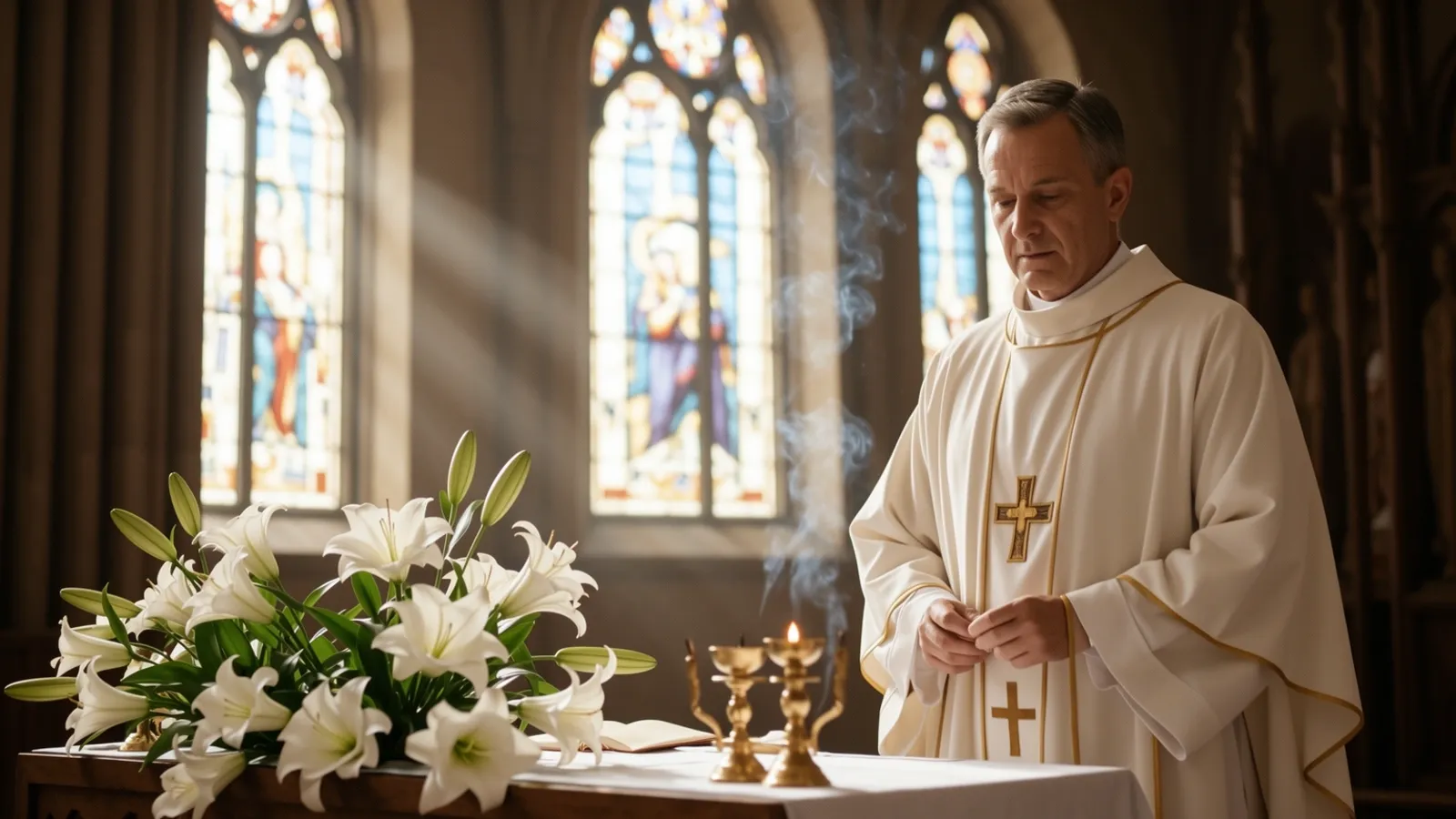
During the Octave of Easter, the liturgy undergoes several specific changes to signal the extraordinary nature of the season. The most visible change is the use of white or gold vestments, which symbolize purity, joy, and the glory of the Resurrection. In the traditional Roman Rite and the modern ordinary form, the Gloria in Excelsis is sung at every Mass during the Octave, even on weekdays that would normally not require it. This constant hymn of praise keeps the tone of the celebration at the level of a Sunday feast.
Another significant feature is the inclusion of the Easter Sequence, known as the Victimae Paschali Laudes. This poetic chant, dating back to the 11th century, tells the story of the Resurrection and the meeting between Mary Magdalene and the Risen Christ. While it is mandatory on Easter Sunday, the Church encourages its use throughout the entire Octave. The sequence serves as a lyrical meditation on the "death and life" that engaged in a "stupendous combat," ending with the definitive victory of the "Prince of Life."
The Double Alleluia
A unique liturgical detail of the Octave is the Double Alleluia added to the dismissal at the end of Mass. The deacon or priest chants, "Go forth, the Mass is ended, alleluia, alleluia," and the people respond, "Thanks be to God, alleluia, alleluia." This specific dismissal is reserved only for the Octave of Easter and the Solemnity of Pentecost. It serves as a final, joyful shout that the season of penance is over and the season of the Lord has arrived.
The Easter Preface
The Eucharistic Prayer during the Octave uses a specific Easter Preface that highlights the sacrifice of Christ as the Paschal Lamb. The Church prays that the "paschal sacrament" may continue to bear fruit in the lives of the faithful. This liturgical consistency across the eight days ensures that the focus of the congregation never wavers from the empty tomb. For those who cannot attend daily Mass, using the Daily Mass Readings feature on Prayla can help maintain this liturgical focus at home.
The Significance of the Baptismal White Garments
The Octave of Easter was historically known as the Hebdomada Alba, or the White Week. This name refers to the white robes worn by those who were baptized at the Easter Vigil. In the early Church, the neophytes wore these garments as a public sign of their new life in Christ and their state of grace. They would wear them every day for eight days, attending the station churches of Rome to hear the Bishop preach.
On the Saturday of the Octave, the neophytes would formally lay aside their white robes, which is why the day was called Sabbatum in Albis (Saturday in White). However, the internal reality of their baptism was to remain forever. St. Augustine, in one of his famous Easter sermons, told the newly baptized that while they were changing their clothes, their spiritual purity must remain unstained. He urged them to keep the light of faith burning brightly as they entered back into the secular world.
Today, this tradition is preserved in the name of the final day of the Octave: Dominica in Albis, or Sunday in White. Although the practice of wearing robes for a week has faded in most places, the theological meaning remains. Baptism is a death to sin and a rising to new life. As the Church teaches in what the Bible says about baptism, we are buried with Christ so that we might also rise with Him. The Octave reminds us that the grace of baptism is not a one-time event but a permanent identity that we must celebrate and protect.
The Biblical Basis for the Number Eight
The use of an eight-day period for the Easter Octave is not arbitrary but is deeply rooted in the typology of the Old Testament. In the Hebrew Scriptures, the number eight is consistently associated with new beginnings, covenants, and salvation. For instance, the covenant of circumcision, which brought a male child into the people of God, was commanded to take place on the eighth day. This prefigured the "circumcision of the heart" that occurs through Christian Baptism.
Furthermore, when the world was cleansed by the Great Flood, there were eight people on the Ark who were saved through water to begin a new era for humanity. St. Peter explicitly connects this to baptism in his first epistle. The dedication of the Temple under King Solomon also involved an eight-day celebration, showing that the dwelling of God among men is an event of supreme importance. Christ, the new and eternal Temple, rose on the eighth day to dwell within His Church forever.
Which some time were incredulous, when they waited for the patience of God in the days of Noe, when the ark was a building: wherein a few, that is, eight souls, were saved by water. 1 Peter 3:20
In the New Testament, we see that Jesus appeared to the Apostles "eight days later" when Thomas was present. This timing is significant because it shows that the Sunday gathering was already becoming the standard for the early Christian community. By appearing on the first day of the week and then again eight days later, Jesus sanctified the Lord's Day as the new Sabbath. The Octave of Easter captures this movement from the first Sunday of the Resurrection to the following Sunday, encompassing the entire reality of Christ's victory.
Comparison of Easter and Christmas Octaves
While the Church observes several octaves in the traditional calendar, only two remain in the current General Roman Calendar: the Octave of Easter and the Octave of Christmas. While both are eight-day celebrations, they differ in their liturgical rank and theological focus. The Easter Octave is the primary octave because the Resurrection is the greatest feast of the Church year. Every day of the Easter Octave is a Solemnity, whereas the days within the Christmas Octave are not all ranked as Solemnities.
| Feature | Octave of Easter | Octave of Christmas |
|---|---|---|
| Liturgical Rank | All days are Solemnities | Mixed (Feasts and Solemnities) |
| Primary Theme | Redemption and New Life | Incarnation and Family |
| End Date | Divine Mercy Sunday | Mary, Mother of God (Jan 1) |
| Friday Fasting | Suspended (No meat abstinence) | Required (unless a Solemnity falls) |
| Gloria | Sung every day | Sung every day |
The Easter Octave is more "monolithic" in its focus. Every Mass and every hour of the Liturgy of the Hours centers exclusively on the Resurrection. In contrast, the Christmas Octave includes other major feasts that, while related to the Incarnation, have their own distinct identities, such as the Feast of St. Stephen, St. John the Apostle, and the Holy Innocents. This distinction highlights that while the birth of Christ is the beginning of our salvation, the Resurrection of Christ is its definitive completion.
The Feast of Divine Mercy as the Octave Day
The eighth day of the Octave, the Second Sunday of Easter, was officially designated as Divine Mercy Sunday by Pope St. John Paul II in the year 2000. This designation was based on the private revelations of St. Faustina Kowalska, a Polish nun who received messages from Jesus about His desire to pour out His mercy upon the world. Jesus specifically requested that the Feast of Mercy be celebrated on the first Sunday after Easter, which is the conclusion of the Octave.
Theologically, this fits perfectly with the meaning of the Octave. The Resurrection is the ultimate act of God's mercy, as it opens the gates of Heaven to sinful humanity. On this day, the Church offers a plenary indulgence under the usual conditions (confession, communion, and prayer for the Pope's intentions) to those who participate in Divine Mercy devotions. This emphasizes that the fruit of the Resurrection is the forgiveness of sins and the restoration of our relationship with the Father.
The community of believers was of one heart and mind, and no one claimed that any of his possessions was his own, but they had everything in common. Acts 4:32
This reading from the Acts of the Apostles is traditionally read on the Octave Day, showing the practical effect of the Resurrection on the first Christian community. They lived in a state of perfect charity, which is the goal of the Divine Mercy message. For those looking to deepen this devotion, learning how to pray the Divine Mercy Chaplet is a common way to mark the end of the Octave. The feast serves as a bridge between the historical event of the Resurrection and the ongoing sacramental life of the Church.
Traditional Customs and Practices for the Octave
Throughout history, Catholics have developed various customs to mark the eight days of Easter. In many European cultures, Easter Monday is a public holiday known as "Emmaus Day." Families take long walks in the countryside, mimicking the journey of the two disciples who met Jesus on the road to Emmaus. This tradition reminds us that the Risen Lord walks with us in our daily lives, even when we do not immediately recognize Him.
Another tradition involves the Easter Greeting. In many Eastern and Western traditions, instead of saying "hello," people greet each other with "Christ is Risen!" to which the response is "He is Risen indeed!" During the Octave, this greeting serves as a constant reminder of the liturgical season. It keeps the joy of the feast at the forefront of social interactions. In some regions, holy water blessed at the Easter Vigil is brought home to bless the house and the family meals throughout the week.
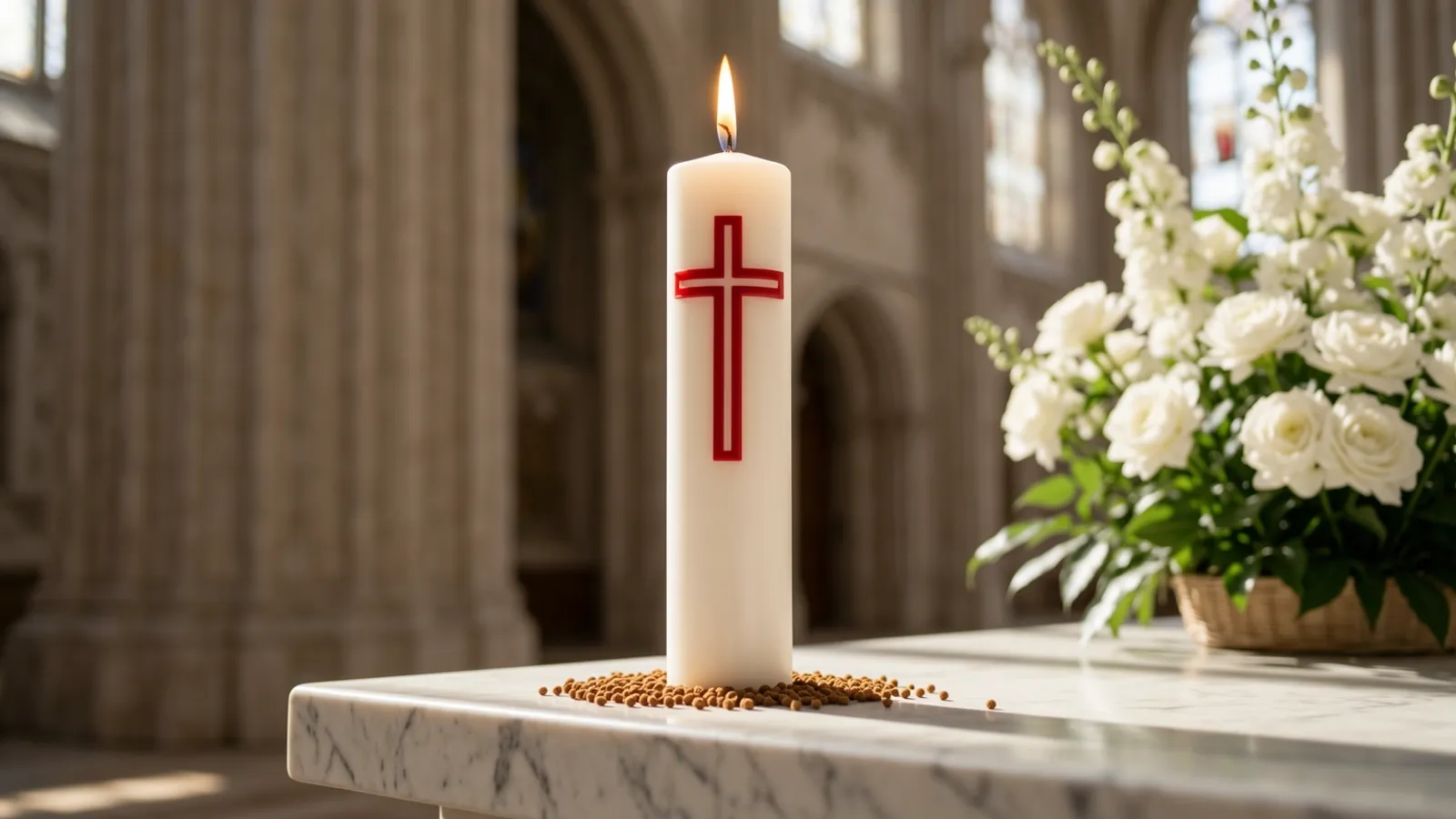
Because the Octave is a time of feasting, many families prepare special foods that were avoided during the Lenten fast. The Easter Lamb, often made of cake or butter, remains a popular centerpiece. In the domestic church, the Octave is a time to keep the Easter candle (or a smaller version of it) burning during dinner. These small domestic rituals help children understand that Easter is not just a single day of getting candy, but a prolonged season of spiritual triumph. Using the Catholic calendar on Prayla can help families track these days and find specific prayers for each day of the Octave.
What the Catechism Teaches About the Easter Season
The Catechism of the Catholic Church (CCC) provides a clear framework for understanding why the Easter Octave and the subsequent season are so vital. According to the Catechism, Easter is not simply one feast among others, but the "Feast of feasts" and the "Solemnity of solemnities." Just as the Eucharist is the "Sacrament of sacraments," Easter is the pinnacle of the liturgical year (CCC 1169).
The CCC notes that the mystery of the Resurrection, in which Christ crushed death, penetrates with its powerful energy our old time, until all is subjected to Him. This is why the Church extends the celebration. The Octave is a period where the sacramental economy is most visible. The Catechism emphasizes that through the liturgy, the work of our redemption is accomplished. During these eight days, the Church especially reflects on the "new life" given to us through the Paschal Mystery.
From the time of the apostles, in keeping with the heritage of the Old Testament, the Church celebrated the paschal mystery every seven days, on the day called the Lord's Day or Sunday. [CCC 1166]
The Catechism also links the Easter celebration to the hope of our own resurrection. By celebrating the Octave, we are practicing for the eternal life of Heaven. The Church teaches that the liturgy is a participation in the heavenly liturgy. Therefore, the eight days of joy are a foretaste of the unending joy of the saints. This is why the Church insists on the highest level of beauty and reverence in the liturgy during this time, using the best incense, music, and art to reflect the glory of God.
The Role of the Psalms and Readings in the Octave
The Scriptural selections for the Octave of Easter are carefully curated to show the development of the early Church and the various witnesses to the Resurrection. The first readings throughout the week are taken from the Acts of the Apostles. This is unique because, during the rest of the year, the first reading usually comes from the Old Testament. By reading Acts, the Church shows that the Resurrection is the power that launched the mission of the Apostles and the birth of the Church.
In the Gospels of the Octave, we follow a chronological sequence of the Resurrection appearances. On Monday, we hear of the women at the tomb; on Tuesday, Mary Magdalene's encounter with Jesus; on Wednesday, the Road to Emmaus; on Thursday, the appearance in the Upper Room; on Friday, the breakfast by the Sea of Tiberias; and on Saturday, the Great Commission. This sequence allows the faithful to "walk" with the Apostles as they move from fear and doubt to radical faith.
| Day | Gospel Reading (Summary) | Key Theme |
|---|---|---|
| Monday | Matthew 28:8-15 | The Women and the Guards |
| Tuesday | John 20:11-18 | Appearance to Mary Magdalene |
| Wednesday | Luke 24:13-35 | The Road to Emmaus |
| Thursday | Luke 24:35-48 | Jesus eats with the Apostles |
| Friday | John 21:1-14 | The 153 Large Fish |
| Saturday | Mark 16:9-15 | The Commission to preach |
| Sunday | John 20:19-31 | Doubting Thomas |
The Psalms used during the Octave are primarily Hallelujah Psalms (Psalms 113-118). These were the same psalms sung by Jesus and the Apostles during the Passover meal. By singing them now, the Church connects the ancient Jewish hope with its fulfillment in Christ. For those who want to study these texts more deeply, reading what the Bible says about the Eucharist can provide context for why Jesus chose to reveal Himself "in the breaking of the bread" at Emmaus on Easter Wednesday.
Common Misconceptions About the Easter Octave
One common misconception is that the Octave of Easter is merely a "pious suggestion" rather than a formal liturgical requirement. Some believe that once Easter Sunday is over, the "real" holiday has ended and they can return to their Lenten penances. However, the Church legally and liturgically considers the Monday after Easter to be just as much of a Solemnity as the Sunday itself. To return to a state of mourning or strict fasting during this time is to miss the liturgical reality of the season.
Another misunderstanding involves the Friday of the Octave. Many Catholics are unaware that the requirement to abstain from meat is lifted on this specific Friday. Because the Octave is one long celebration of the Lord's Resurrection, every day functions like a Sunday. Since we never fast or abstain on a Sunday, we do not fast or abstain during the Octave. This is not a "loophole" but a reflection of the theological truth that the Bridegroom is with us, and therefore we must feast.
Finally, some confuse the Octave of Easter with the entire 50-day Easter Season. While they are related, they are distinct. The Octave is the intense, eight-day "immersion" in the Resurrection, while the Easter Season (Paschaltide) is the broader fifty-day period leading up to Pentecost. Understanding the difference helps the faithful pace their spiritual lives. The Octave is a sprint of high-intensity celebration, while the rest of the season is a marathon of sustained joy in the new life of the Spirit.
Practical Ways to Celebrate the Octave at Home
Celebrating the Octave does not have to be limited to what happens inside the church building. There are many ways to bring the "one long day" of Easter into the home at various levels of commitment. Whether you are a beginner or looking for advanced spiritual practices, the Octave offers a chance to reset your spiritual life after the rigors of Lent. The key is to maintain a disposition of gratitude and joy throughout the eight days.
Beginner: Simple Daily Joy
For those just starting to observe the Octave, the simplest practice is to say the Regina Caeli instead of the Angelus at morning, noon, and evening. This traditional Marian antiphon is specifically used during the Easter season. Additionally, you can keep your "Easter decorations" up and visible. Do not take down the Easter lilies or the cross until after the Octave has ended. Make a point to eat a special treat or a favorite meal on the Friday of the Octave to celebrate the suspension of the fast.
Intermediate: Liturgical Participation
If you are able, attend daily Mass at least once or twice during the week. The readings are beautiful and provide a narrative arc of the Resurrection that you miss if you only attend on Sundays. If you cannot get to Mass, use a Catholic Bible to read the daily Gospel selections listed in the table above. You might also consider learning how to pray the Rosary using only the Glorious Mysteries for the entire eight days to keep your mind fixed on the triumph of Christ.
Advanced: The Divine Office and Mystagogy
Those seeking a deeper experience can pray the Liturgy of the Hours, specifically Lauds (Morning Prayer) and Vespers (Evening Prayer). During the Octave, the prayers are repetitive and powerful, hammering home the reality of the empty tomb. You can also read the mystagogical homilies of the Church Fathers, such as St. Cyril of Jerusalem's Catecheses. This practice of "mystagogy" helps you enter into the deeper meaning of the sacraments you renewed at Easter. Finally, consider performing a spiritual work of mercy each day to share the light of the Resurrection with others.
The Importance of the Regina Caeli
The Regina Caeli (Queen of Heaven) is the specific prayer that replaces the Angelus during the Easter season, including the Octave. This prayer is an invitation to the Blessed Virgin Mary to rejoice because her Son has risen as He said. It is traditionally prayed standing rather than kneeling, which is a posture of the Resurrection. In the early Church, kneeling was forbidden during the Easter season as a sign that we have been raised up with Christ.
This prayer highlights the role of Mary as the first witness to the joy of the Resurrection. While the Gospels do not explicitly record an appearance of Jesus to His Mother, Catholic tradition, supported by saints like St. Ignatius of Loyola and St. John Paul II, has always held that Jesus surely appeared to her first. The Regina Caeli allows us to join in her maternal joy. It is a short, punchy prayer that ends with the same double Alleluia found in the Mass.
Queen of Heaven, rejoice, alleluia. For He whom you did merit to bear, alleluia. Has risen, as he said, alleluia. Pray for us to God, alleluia.
By incorporating this prayer into the Octave, we acknowledge that the Resurrection is a family event. We are members of the Body of Christ, and Mary is our Mother. Her joy is our joy. For those who use the Prayer Library on Prayla, the Regina Caeli is a staple for this time of year. It serves as a rhythmic anchor, reminding us three times a day that the world has been fundamentally changed by the events of Easter morning.
Prayer
O God, who by the Resurrection of Thy Son, our Lord Jesus Christ, hast vouchsafed to make glad the whole world, grant, we beseech Thee, that through the intercession of the Virgin Mary, His Mother, we may attain the joys of eternal life. Through the same Christ our Lord. Amen.
Further Reading
- Catechism of the Catholic Church, Paragraphs 1163-1171
- General Norms for the Liturgical Year and the Calendar
- Pope St. Leo the Great, Sermon 71 (On the Resurrection)
- Council of Trent, Decree on the Holy Days
- Code of Canon Law, Canons 1246-1253