What Does the Bible Say About Confession
What the catechism says about confession is that it is the primary means for the faithful to obtain pardon from God's mercy for offenses committed against Him. According to the Catechism of the Catholic Church, this sacrament reconciles the sinner with the Church and restores the soul to a state of grace (CCC 1422). It is a divine gift instituted by Christ to heal the spiritual wounds caused by sin.
What the Catechism Teaches About the Sacrament of Reconciliation
What the catechism says about confession is that it is a fundamental part of the Church's healing mission. The Catechism of the Catholic Church describes this sacrament by several names, including the sacrament of conversion, the sacrament of Penance, the sacrament of confession, and the sacrament of forgiveness. Each of these names highlights a different aspect of the process of returning to the Father. The Catechism of the Catholic Church teaches that "those who approach the sacrament of Penance obtain pardon from God's mercy for the offense committed against him, and are, at the same time, reconciled with the Church" (CCC 1422). This dual reconciliation is a key feature of the Catholic faith, acknowledging that sin harms both our relationship with God and our relationship with the Body of Christ.
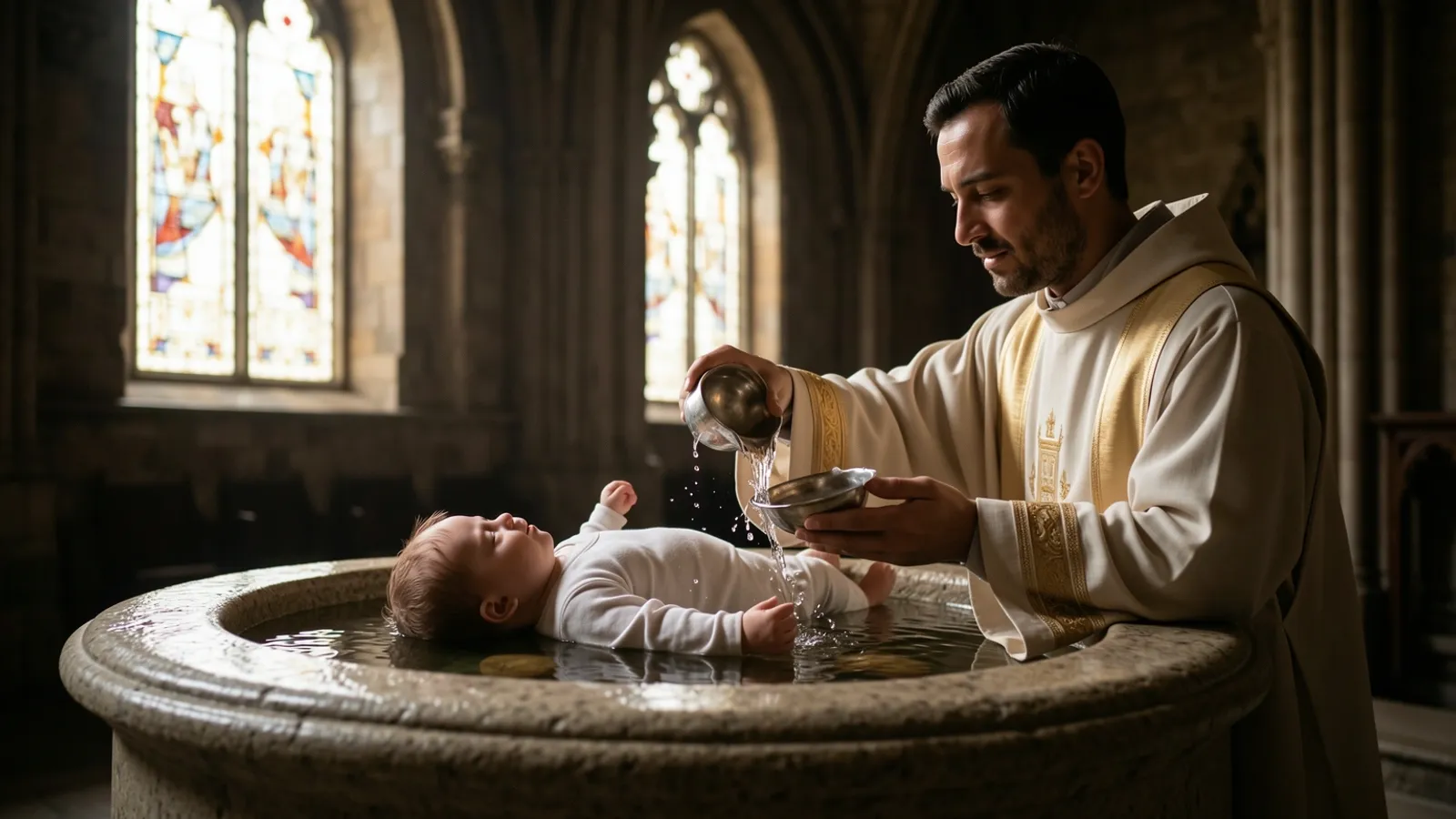
The Catechism further explains that the sacrament is necessary for salvation for those who have fallen into mortal sin after their Baptism. It refers to the sacrament as the "second plank of salvation of the soul after the shipwreck which is the loss of grace" (CCC 1446). This teaching emphasizes that while Baptism is the primary washing away of sin, the human soul remains subject to weakness and the inclination toward evil, which the Church calls concupiscence. Therefore, the sacrament of Penance provides a regular and reliable way to restore the white garment of Baptism when it has been soiled by post-baptismal sin.
In terms of its structure, the Catechism breaks down the sacrament into the acts of the penitent and the acts of the minister. The penitent must provide contrition, confession, and satisfaction. Contrition is the most important act, consisting of a genuine sorrow of the soul and a detestation for the sin committed, together with the resolution not to sin again. Without this internal movement of the heart, the external words of confession remain empty. The minister, who must be a validly ordained priest, provides the words of absolution, which are the efficacious sign of God's forgiveness. The 1.39 billion Catholics worldwide are encouraged to utilize this sacrament frequently to maintain spiritual health and prepare for the reception of the Eucharist.
Confession in the Bible and the Call to Repentance
Confession in the bible begins with the universal call to repentance that echoes through both the Old and New Testaments. From the moment of the first sin in the Garden of Eden, God has called humanity to account for its actions. When Adam and Eve sinned, God did not immediately cast them out without a word; He asked them questions to give them the opportunity to confess their fault. This pattern continues throughout the history of Israel, where the prophets constantly urged the people to turn back to God with their whole hearts. Biblical confession is never merely a private internal feeling but is often accompanied by external signs and vocal declarations of guilt.
In the New Testament, the theme of confession becomes even more explicit. The Gospel of Mark begins with the ministry of John the Baptist, who prepared the way for the Lord by preaching a baptism of repentance. The scriptures record that people from all over Judea went out to him and were baptized in the Jordan River, "confessing their sins" Mark 1:5. This shows that vocal confession was already a recognized practice among those seeking to prepare their hearts for the Messiah. Jesus Christ Himself began His public ministry with the command to "repent and believe in the Gospel" Mark 1:15. Repentance, or metanoia in Greek, involves a total change of mind and heart, which naturally leads to the desire to name and renounce one's sins.
The concept of biblical confession is also found in the writings of the Apostles. The First Letter of John provides a clear promise for those who are willing to be honest about their spiritual state. It states that "if we confess our sins, he is faithful and just, to forgive us our sins and to cleanse us from all iniquity" 1 John 1:9. This verse highlights that God's forgiveness is contingent upon our willingness to acknowledge our transgressions. If we claim to be without sin, we deceive ourselves and the truth is not in us. Therefore, the act of naming our sins is an act of truth-telling that allows the light of God to enter our souls and dispel the darkness of guilt.
Where Is Confession in the Bible and the New Covenant
Where is confession in the bible is a question that leads us directly to the Upper Room on the evening of the Resurrection. The most definitive moment for the institution of the Sacrament of Penance occurs in the Gospel of John. After Jesus rose from the dead, He appeared to His Apostles and said, "Peace be to you. As the Father hath sent me, I also send you" John 20:21. He then did something unique: He breathed on them and said, "Receive ye the Holy Ghost. Whose sins you shall forgive, they are forgiven them; and whose sins you shall retain, they are retained" John 20:22-23. This specific act of breathing recalls the creation of man in Genesis, signaling a new creation through the forgiveness of sins.
The Power of the Keys and Binding and Loosing
Another critical passage for understanding the biblical basis of confession is found in the Gospel of Matthew. Jesus promised Peter the "keys of the kingdom of heaven" and the power to bind and loose on earth Matthew 16:19. This authority was later extended to all the Apostles in Matthew 18:18. In the Jewish context, binding and loosing referred to the authority to interpret the law and to exclude or readmit members to the community. In the context of the New Covenant, the Church has always understood this to include the authority to forgive or retain sins. This power is not the Apostles' own but is a participation in the sovereign power of Christ to reconcile sinners to God.
The logic of John 20:23 necessitates the practice of oral confession. If the Apostles and their successors, the bishops and priests, are to decide whether to forgive or retain a sin, they must first know what the sin is. They cannot make a judgment on a sin that has not been expressed. Therefore, the penitent must verbally confess their sins so that the minister of the sacrament can exercise the discretion given to him by Christ. This biblical mandate is the foundation for the Catholic practice of going to a priest to receive absolution. It is not a human invention but a direct response to the command of the Risen Lord.
Old Testament Roots of Atonement and Confession
Confession in the bible is deeply rooted in the sacrificial system of the Old Testament. In the Book of Leviticus, the law prescribed specific rituals for those who committed sins, whether intentionally or through ignorance. The law stated that when a person is guilty in any of these matters, "he shall confess that wherein he hath sinned" Leviticus 5:5. Following this confession, the individual was required to bring a sin offering to the priest, who would then make atonement for the person before the Lord. This sequence of confession, sacrifice, and priestly mediation prefigures the Sacrament of Penance.
The High Priest also performed a corporate act of confession on the Day of Atonement, known as Yom Kippur. According to Leviticus 16:21, Aaron was to lay both his hands upon the head of the live goat and "confess over him all the iniquities of the children of Israel, and all their offenses and sins." This public and ritualized acknowledgment of sin was necessary for the purification of the community. It taught the people that sin is not just a private matter but something that affects the entire covenant relationship with God. The sacrificial blood of the Old Covenant pointed forward to the Precious Blood of Christ, which truly takes away the sins of the world.
Furthermore, the Psalms are filled with the language of confession and repentance. King David, after his grave sins of adultery and murder, wrote the Miserere, or Psalms 51. He cried out, "For I know my iniquity, and my sin is always before me" Psalms 51:3. David understood that while he had sinned against people, his primary offense was against God. His humble confession led to his restoration, although he still had to face the temporal consequences of his actions. This distinguishes between the guilt of sin, which is forgiven, and the punishment due to sin, which may remain. This distinction is vital for the Catholic understanding of penance and purgatory.
Catholic Confession Verses and Apostolic Authority
Catholic confession verses emphasize that Christ entrusted the ministry of reconciliation to His Church. St. Paul writes extensively about this in his Second Letter to the Corinthians. He explains that "God indeed was in Christ, reconciling the world to himself... and he hath placed in us the word of reconciliation" 2 Corinthians 5:19. Paul identifies himself and the other Apostles as ambassadors for Christ, through whom God makes His appeal to the world. He beseeches the faithful to "be reconciled to God" 2 Corinthians 5:20. This ministry is an active, ongoing work performed by the leaders of the Church.
In the Acts of the Apostles, we see the early Church practicing a form of public confession. For instance, in Ephesus, many of those who had become believers came "confessing and declaring their deeds" Acts 19:18. This was particularly true for those who had practiced magic and occult arts. By naming their sins publicly, they broke the power of the enemy and demonstrated their total commitment to Christ. This historical record shows that the early Christians did not believe that a private, silent prayer was the only way to deal with post-baptismal sin. They understood the need for an external, ecclesial act of renunciation.
The Epistle of James provides another one of the most cited catholic confession verses. James instructs the faithful, "Confess therefore your sins one to another: and pray one for another, that you may be saved" James 5:16. In the immediate context of this passage, James is discussing the role of the "priests of the church" (Greek: presbyteroi) who are called to anoint the sick. The prayer of faith and the anointing are linked to the forgiveness of sins. By telling the faithful to confess to one another in the context of the elders' ministry, James reinforces the sacramental nature of confession within the community of believers.
The Role of the Priest as Minister of God Mercy
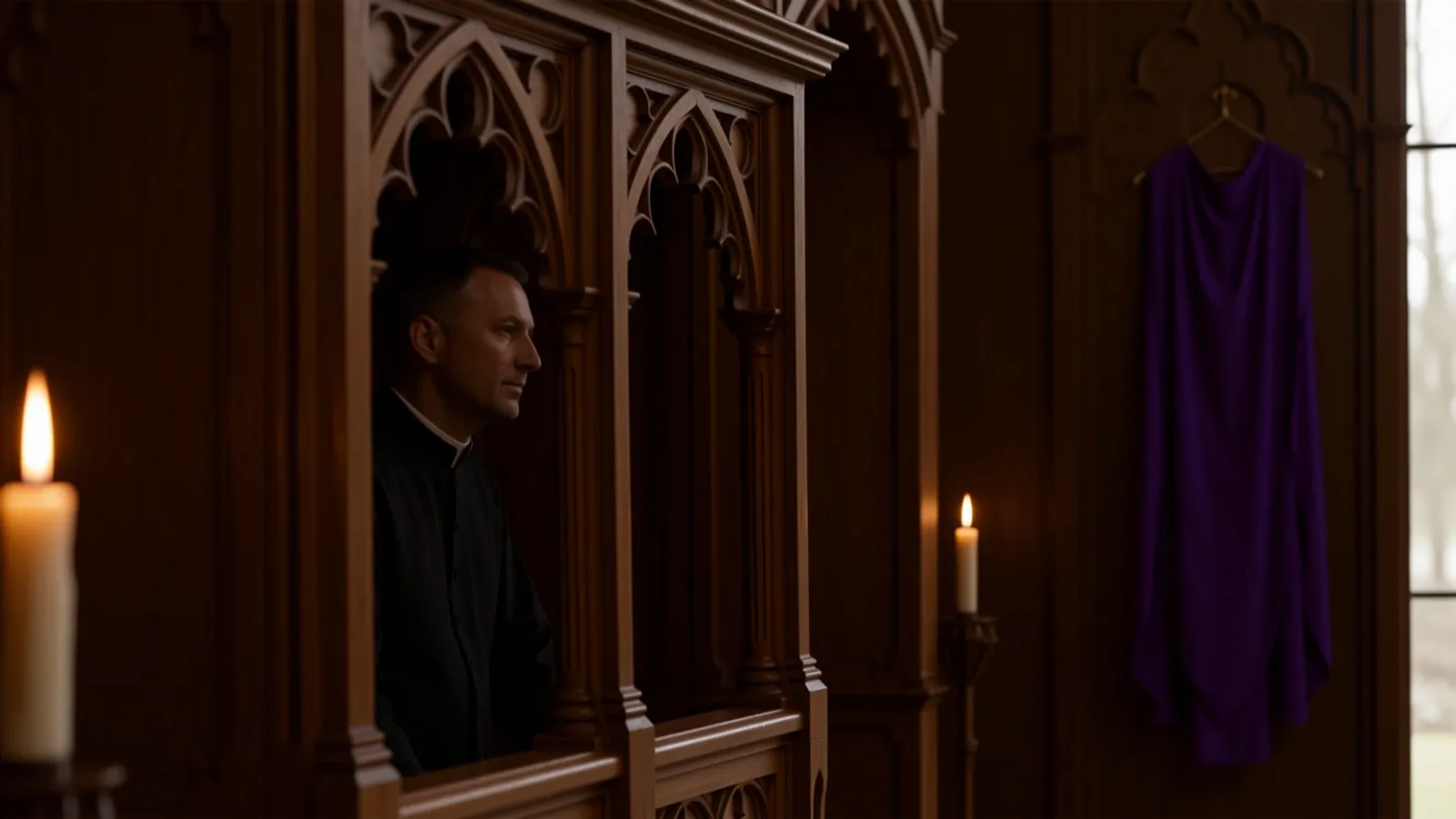
The priest in the confessional does not act on his own authority but in persona Christi, which means in the person of Christ. When a priest says, "I absolve you from your sins," it is Christ Himself who is speaking through the human instrument. This is consistent with the biblical pattern where God uses human mediators to communicate His grace. Just as God used the prophets to speak His word and the Apostles to heal the sick, He uses the ordained priesthood to dispense His mercy. The Council of Trent, which met in 25 sessions from 1545 to 1563, dogmatically defined that only priests have the power to provide sacramental absolution.
The Seal of Confession and Priestly Mercy
A vital aspect of the priest's role is the Sacramental Seal, which is the absolute duty of the priest not to disclose anything he learns from a penitent during confession. This seal is inviolable. Throughout history, priests have suffered martyrdom rather than reveal the secrets of the confessional. A famous example is St. John Nepomucene, who was drowned in the Vltava River in 1393 by King Wenceslaus IV because he refused to reveal what the Queen had confessed. This total secrecy ensures that the confessional remains a safe harbor for the soul, where the sinner can be completely honest without fear of earthly repercussions.
The priest is also called to be a spiritual physician and a judge. As a physician, he listens to the "symptoms" of the soul and offers spiritual counsel and a penance to help the person heal. As a judge, he does not judge the person's worthiness but the nature of the sins to determine if they can be absolved. If a person is not truly sorry or intends to continue in a state of mortal sin, the priest cannot grant absolution. However, the primary character of the priest in the confessional is that of the Prodigal Son's father, waiting with open arms to welcome the sinner back home. He reflects the heart of Christ, who came not to condemn the world but to save it.
Biblical Confession and the Distinction Between Sins
Biblical confession requires an understanding of the gravity of the sins being confessed. The Church, following the scriptures, distinguishes between mortal sin and venial sin. St. John explicitly mentions this distinction in his first epistle. He writes, "There is a sin unto death... and there is a sin not unto death" 1 John 5:16-17. A sin unto death, or mortal sin, is a radical rejection of God's law that destroys the charity in a person's heart. Without repentance and the grace of the sacrament, such a sin leads to eternal separation from God.
To understand the difference, it is helpful to look at the criteria for a sin to be considered mortal. According to the Catechism, three conditions must be met simultaneously: grave matter, full knowledge, and deliberate consent. Grave matter is specified by the Ten Commandments. Full knowledge means the person knows the act is a serious sin. Deliberate consent means the person makes a free choice to commit the act. If any of these are missing, the sin may be venial. While venial sin does not destroy the life of grace, it weakens it and disposes the soul to commit mortal sin. For a deeper look at these categories, you can read about what is mortal sin example and what is venial sin examples in our other guides.
| Type of Sin | biblical Basis | Effect on the Soul | Remedy |
|---|---|---|---|
| Mortal Sin | 1 John 5:16 | Destroys sanctifying grace and charity. | Sacramental Confession is necessary. |
| Venial Sin | 1 John 5:17 | Weakens charity and the fervor of spirit. | Prayer, Mass, and Confession. |
| Original Sin | Romans 5:12 | Deprives the soul of original holiness. | Sacrament of Baptism. |
The Necessity of Oral Confession and Contrition
Why must a Catholic confess to a priest instead of just praying directly to God? While it is true that God can forgive sins in any way He chooses, He has established a specific normative way for those who are members of His Church. Oral confession is a requirement of the sacrament because it embodies the virtue of humility. It is easy to "confess" to God in the privacy of one's mind where one does not have to face the shame of naming the sin aloud. By speaking the sin to another human being, the penitent takes full responsibility for their actions. This externalization is also psychologically healing, as it brings the sin out of the darkness and into the light.
Contrition is the most necessary part of the sacrament. There are two types of contrition: perfect and imperfect. Perfect contrition arises from a love of God above all things. It forgives venial sins and can even forgive mortal sins if it includes the firm resolution to go to sacramental confession as soon as possible. Imperfect contrition, also called attrition, arises from a consideration of the ugliness of sin or the fear of hell and punishment. While imperfect contrition is not enough to justify a soul on its own, it is sufficient for the validity of the sacrament of Penance. God, in His mercy, accepts even our imperfect sorrow when we approach the priest.
In the history of the Church, the Council of Trent emphasized that the vocal confession of all mortal sins is necessary by divine law. The Council stated that "if any one denieth, that sacramental confession was instituted, or is necessary to salvation, of divine right... let him be anathema" (Council of Trent, Session 14, Canon 6). This firm stance was taken to protect the integrity of the sacrament against those who claimed that internal sorrow was sufficient. The Church has always held that the visible sign (the confession and absolution) is the means by which the invisible grace of forgiveness is communicated to the believer.
Common Misconceptions About Catholic Confession
A frequent objection from non-Catholics is the claim that "only God can forgive sins." This is often based on the reaction of the scribes in the Gospel of Mark when Jesus healed the paralytic: "Who can forgive sins, but God only?" Mark 2:7. Catholics fully agree that only God has the inherent power to forgive sins. However, the Church teaches that God chose to exercise this power through human instruments. Jesus, who is God, proved He had the authority to forgive sins, and He explicitly delegated that same authority to His Apostles. To reject the priest's role is to reject the method Christ Himself chose for the distribution of His mercy.
Another misconception is that confession gives Catholics a "license to sin." The idea is that a person can sin as much as they want, go to confession, and then repeat the cycle. This is a misunderstanding of the requirement for a purpose of amendment. For a confession to be valid, the penitent must have a sincere intention to avoid the sin in the future. If a person goes into the confessional intending to commit the same sin again, the confession is invalid and potentially sacrilegious. The sacrament is not a free pass but a spiritual medicine intended to help the person grow in holiness and overcome their vices.
Some also argue that confession is not found in the early Church and was a medieval invention. However, historical documents like the Didache (written around 70-100 AD) and the writings of St. Cyprian of Carthage (3rd century) prove that the confession of sins was a standard practice from the beginning. While the external format of the sacrament has developed, moving from public confession in the early centuries to private confession—the core essence of the sacrament has remained unchanged. Catholics who want to understand how their faith differs from other traditions can read about the difference between catholic and christian explained for more context.
The Benefits of Frequent Confession for the Spiritual Life
Frequent confession is one of the most effective ways to make progress in the spiritual life. Even if a person has not committed a mortal sin, confessing venial sins provides the grace of state to resist future temptations. This practice is often called "devotional confession." Many great saints, such as St. John Paul II and St. Mother Teresa, went to confession weekly or even daily. They understood that the more one approaches the light of God, the more one sees the small specks of dust and imperfections on the soul. Regular use of the sacrament keeps the conscience sensitive and prevents the hardening of the heart.
Practical Benefits of the Sacrament
Beyond the forgiveness of guilt, the sacrament provides several specific spiritual benefits:
- Restoration of Grace: It restores the sanctifying grace lost by mortal sin.
- Increase of Strength: It gives actual grace to help the penitent avoid the specific sins confessed.
- Peace of Conscience: It provides the psychological and spiritual assurance that one is right with God.
- Self-Knowledge: The process of examination helps a person identify patterns of pride, greed, or lust.
- Spiritual Direction: The priest can offer personalized advice to help the soul advance in virtue.
For those who find it difficult to remember their sins, using a tool like the Prayla app can be very helpful. The app features a comprehensive examination of conscience based on the Ten Commandments and the duties of one's state in life. By spending a few minutes with these prompts before entering the confessional, the penitent can ensure they are making a thorough and sincere confession. This preparation is essential for experiencing the full transformative power of the sacrament. You can also find a prayer for confession in the app to help quiet your heart before meeting the priest.
How to Prepare for the Sacrament of Penance
Preparing for confession is a process that involves both the mind and the heart. It should not be rushed, as a good confession requires careful reflection. The first step is to pray to the Holy Spirit for the grace to see your sins clearly and to have true sorrow for them. Without the help of the Spirit, we often hide our faults from ourselves or make excuses for our behavior. A thorough preparation typically follows a five-step framework that has been taught by the Church for centuries.
| Step | Action | Purpose |
|---|---|---|
| 1 | Examination of Conscience | Identifying specific sins in thought, word, and deed. |
| 2 | Contrition | Awakening sincere sorrow for offending God. |
| 3 | Purpose of Amendment | Resolving to avoid these sins and the near occasions of sin. |
| 4 | Confession | Naming the sins to the priest clearly and honestly. |
| 5 | Penance/Satisfaction | Performing the act of reparation assigned by the priest. |
For a beginner, the focus should be on identifying any mortal sins. Use a simple guide based on the Ten Commandments. Do not worry about the exact wording; simply tell the priest how long it has been since your last confession and state your sins clearly. For an intermediate practitioner, preparation should include looking at the "roots" of sin, the underlying vices like pride or sloth that lead to repeated actions. For the advanced soul, preparation involves looking at the lack of fervor in one's prayer life and the subtle ways one fails to love God with their whole heart. Regardless of your level, the goal is always a deeper union with Jesus Christ. If you are unsure where to go, you can use the catholic church near me feature to find a local parish with scheduled confession times.
The Historical Development of Confession from the Apostles
The way the Church administers the Sacrament of Penance has changed over time, but the dogmatic core has remained the same. In the first few centuries, for very grave sins like apostasy, murder, or adultery, the penance was often public and lasted for a long duration. Penitents would stand at the door of the church in sackcloth and ashes, asking for the prayers of the faithful. This was known as the "order of penitents." Absolution was usually given only once in a lifetime after the penance was completed. This rigorous discipline emphasized the gravity of sin and the value of the grace of Baptism.
During the 7th century, Irish and Anglo-Saxon monks began the practice of private, repeatable confession. They brought this tradition to continental Europe, and it eventually became the standard for the entire Western Church. This shift allowed for more frequent reception of the sacrament and emphasized the role of the priest as a spiritual father and physician. The Fourth Lateran Council in 1215 formalized the requirement that every Catholic must confess their grave sins at least once a year during the Easter season. This rule, known as the "Easter Duty," remains in effect today as one of the Precepts of the Church.
The Council of Trent (1545-1563) further refined the theology of the sacrament in response to the Protestant Reformation. It clarified that confession must be "integral," meaning all known mortal sins must be confessed by species and number. If a person committed the same mortal sin five times, they should mention the number if possible. This ensures that the priest can provide a penance proportionate to the gravity of the offenses. Today, the Church continues to uphold these traditional requirements while also encouraging the faithful to see the sacrament as a personal encounter with the Merciful Jesus, as described by saints like St. Faustina Kowalska.
Common Questions About Biblical Confession
Many people ask if they can just confess their sins to a friend or a mentor. While spiritual accountability is good, it does not carry the sacramental power of absolution. Only a priest has the authority to act in the person of Christ to forgive sins. Another common question is whether a sin is forgiven if it was accidentally forgotten during confession. The answer is yes. If you made a sincere examination and intended to confess everything, the "forgotten" sin is forgiven along with the others. However, if it was a mortal sin, you should mention it in your next confession to maintain the integrity of the sacrament.
The Traditional Act of Contrition
O my God, I am heartily sorry for having offended Thee, and I detest all my sins because of thy just punishments, but most of all because they offend Thee, my God, who art all good and deserving of all my love. I firmly resolve with the help of Thy grace to sin no more and to avoid the near occasion of sin. Amen.
Finally, some wonder about the relationship between confession and the Eucharist. St. Paul warns that anyone who eats the bread or drinks the cup of the Lord unworthily will be "guilty of the body and of the blood of the Lord" 1 Corinthians 11:27. He tells the faithful to "examine himself" before eating. For this reason, anyone aware of having committed a mortal sin must go to confession before receiving Holy Communion. To do otherwise is to commit the sin of sacrilege. For more on the biblical roots of the altar, you can read what does the bible say about the eucharist in our library.
The Power of the Sacrament in the Lives of Saints
The lives of the saints provide the most beautiful testimony to the power of confession. St. John Vianney, the Curé of Ars, is the patron saint of parish priests. He spent up to 16 hours a day in the confessional, with people traveling from all over Europe to seek his counsel. He had the gift of "reading souls," where he could sometimes tell a penitent a sin they had forgotten or were trying to hide. He wept frequently in the confessional, not because he was angry, but because he was overwhelmed by the thought of how much sin offends the goodness of God. He proved that a single priest, dedicated to the ministry of mercy, could transform an entire village.
In more recent times, St. Padre Pio was known for his rigorous and sometimes blunt approach in the confessional. He wanted to ensure that every penitent was truly sorry and had a firm purpose of amendment. He would often tell people to go away and come back when they were ready to truly give up their sins. While this seemed harsh to some, it resulted in thousands of profound conversions. He saw the confessional as a battlefield where souls were rescued from the clutches of the devil. His life reminds us that the sacrament is a serious matter of eternal life or death.
St. Augustine of Hippo wrote a whole book called Confessions, which is one of the greatest works of Western literature. In it, he doesn't just list his sins; he praises God's mercy for leading him out of a life of immorality and heresy. He famously wrote, "Our heart is restless until it rests in Thee." This rest is found most perfectly through the reconciliation offered by the Church. Whether it is a great sinner like Augustine or a "little flower" like St. Thérèse of Lisieux, every saint relied on the grace of this sacrament to persevere in their vocation. They knew that they were not saints because they never fell, but because they always got back up and returned to the Father's house.
Practical Steps for a Life of Repentance
Living a life of repentance means more than just going to confession once or twice a year. It involves a daily commitment to turning away from sin and toward God. Start by making a nightly examination of conscience. Spend five minutes before sleep reviewing your day, thanking God for the graces received, and asking for forgiveness for where you failed. This daily habit makes your sacramental confessions much easier and more fruitful. It also helps you catch small faults before they grow into major habits.
Secondly, practice the traditional three pillars of Lent all year round: prayer, fasting, and almsgiving. These acts of penance help to make satisfaction for the temporal punishment due to sin. Fasting, in particular, strengthens the will and helps you gain mastery over your bodily desires. Almsgiving, giving to the poor—is a way of practicing charity that "covers a multitude of sins" 1 Peter 4:8. By integrating these practices into your life, you create a "spiritual buffer" that protects you from falling into grave temptation.
Finally, do not be afraid of the priest or the confessional. The devil wants to keep you away by using shame and fear. He whispers that your sins are too big or that the priest will be shocked. These are lies. The priest has heard it all before, and his only desire is to see you reconciled to Christ. As soon as you leave the confessional, the burden of guilt is lifted, and you are given a fresh start. There is no greater feeling of freedom than knowing that your sins are washed away and that you are once again a beloved child of God in a state of grace.
Prayer
O my God, I am heartily sorry for having offended Thee, and I detest all my sins because of thy just punishments, but most of all because they offend Thee, my God, who art all good and deserving of all my love. I firmly resolve with the help of Thy grace to sin no more and to avoid the near occasion of sin. Amen.
Further Reading
- Catechism of the Catholic Church, Paragraphs 1422-1498
- Council of Trent, Fourteenth Session, Doctrine on the Sacrament of Penance
- Pope John Paul II, Apostolic Exhortation Reconciliatio et Paenitentia
- St. Francis de Sales, Introduction to the Devout Life, Part II: Confession
- Roman Catechism (Catechism of the Council of Trent), The Sacrament of Penance