How to Make a Good Confession
Catholics should go to reconciliation at least once per year during the Easter season to fulfill the minimum requirements of Church law. However, for those seeking spiritual growth and the maintenance of a state of grace, the Church strongly recommends going to confession once a month or whenever a mortal sin has been committed. Frequent reception of this sacrament provides the necessary grace to overcome habitual sins and deepen one's relationship with Jesus Christ.
Why Catholics Need the Sacrament of Reconciliation
The Sacrament of Reconciliation is the ordinary means by which God forgives sins committed after Baptism. The Church teaches that while Baptism washes away original sin and all personal sins, the human person remains subject to weakness and a tendency toward evil, which the Council of Trent (1545-1563) called concupiscence. Because of this, Christ instituted a second plank of salvation for those who fall into sin after their initial conversion. This sacrament is not a human invention but a divine gift from Christ to His Apostles on the evening of the Resurrection.
In the Gospel of John, the Lord breathed on the Apostles and said, "Receive the Holy Spirit. If you forgive the sins of any, they are forgiven; if you retain the sins of any, they are retained" John 20:22. This power was not intended only for the Apostles themselves but for their successors, the bishops, and the priests who assist them. The Magisterium of the Catholic Church holds that the priest acts in persona Christi, meaning he acts in the person of Christ the Head. When the priest speaks the words of absolution, it is Christ Himself who forgives the penitent through the ministry of the Church.
Saint John Vianney, the patron saint of parish priests, often spent 16 to 18 hours a day hearing confessions in the small village of Ars. He understood that the sacrament is the primary way for a soul to be reconciled with God and the community. The Catechism of the Catholic Church (CCC 1422) states that those who approach the sacrament obtain pardon from God's mercy for the offense committed against Him and are, at the same time, reconciled with the Church which they have wounded by their sins. For those who want to understand the scriptural basis for this practice, it is helpful to learn what the Bible says about confession in both the Old and New Testaments.
How Often Should Catholics Go to Reconciliation
How often should catholics go to reconciliation depends on the state of their soul and their desire for spiritual perfection. According to the 1983 Code of Canon Law, specifically Canon 989, all the faithful who have reached the age of discretion are bound to confess their grave sins at least once a year. This is often referred to as the Easter Duty, as it is traditionally fulfilled during the Lenten or Easter seasons. However, this is a minimum requirement, much like a minimum heart rate for survival. For a thriving spiritual life, most saints and spiritual directors recommend a much more frequent schedule.
For most practicing Catholics, once a month is an excellent standard for regular confession. This frequency allows the penitent to keep a close watch on their spiritual health and prevents venial sins from hardening into habitual vices. If a person has committed a mortal sin, they must go to confession as soon as possible and before receiving the Holy Eucharist. Receiving Holy Communion in a state of mortal sin is a sacrilege and adds another grave sin to the soul. In the year 2024, there are roughly 1.39 billion Catholics worldwide, and the availability of this sacrament remains the bedrock of their sacramental life.
Regular confession is also a powerful tool for self-discipline. By naming our sins out loud to a priest, we confront our pride and take responsibility for our actions. If you find yourself struggling with the same sins repeatedly, increasing your frequency to every two weeks can provide the specific sacramental grace needed to break those chains. You can use the Prayla app to find the Liturgy of the Hours or other daily prayers that help maintain a spirit of repentance between your visits to the confessional. This consistent practice ensures that the soul remains a fit dwelling place for the Holy Spirit.
The Four Parts of a Good Confession
A valid and fruitful confession consists of four distinct parts that the penitent must perform or receive. These parts are contrition, confession, penance, and absolution. If any of these elements are missing, the sacrament may be invalid or incomplete. The Council of Trent defined these elements in its fourteenth session in 1551, emphasizing that the penitent's acts are the "matter" of the sacrament, while the priest's absolution is the "form."
| Part of the Sacrament | Definition | Actor |
|---|---|---|
| Contrition | Heartfelt sorrow and aversion for the sin committed | Penitent |
| Confession | The vocal naming of all mortal sins to the priest | Penitent |
| Penance | The act of satisfaction or restitution for the sin | Penitent |
| Absolution | The juridical act of the priest forgiving the sin | Priest |
Contrition is the most important act of the penitent. Without a sincere sorrow for sin and a firm purpose of amendment, the confession is not valid. Confession itself must be complete; all mortal sins must be confessed by number and kind to the best of one's memory. If a mortal sin is intentionally withheld, the entire confession is invalid and becomes a sin of sacrilege. Penance is the task given by the priest to help repair the damage caused by sin. Finally, absolution is the moment the priest, by the power given to the Church, pardons the sins of the penitent. Understanding how to go to confession involves mastering these four movements of the heart and soul.
Preparing with an Examination of Conscience
Making a good confession begins long before you enter the confessional with a thorough examination of conscience. This is a prayerful review of your actions, words, and thoughts since your last confession to identify where you have fallen short of God's law. The most common framework for this examination is the Ten Commandments, though many also use the Seven Capital Sins or the Beatitudes as a guide. A proper examination requires quiet reflection and the assistance of the Holy Spirit.
When you begin your examination, you should ask the Holy Spirit for light to see your sins as God sees them. It is helpful to use a written guide to ensure you do not overlook certain areas of your life, such as your duties to your family, your work, or your private prayer life. You can find a comprehensive examination of conscience on the Prayla app to guide you through this process. It is important to be specific; rather than just saying "I was angry," consider whether that anger led to harsh words, physical violence, or a refusal to forgive.
The Ten Commandments as a Framework
Using the Ten Commandments is the traditional method for a catholic confession guide. For the first commandment, ask if you have put anything before God, such as money, fame, or superstition. For the second, consider if you have used the Lord's name in vain or failed to keep your promises. For the third, reflect on whether you have missed Mass on Sundays or Holy Days of Obligation without a grave reason. This systematic approach ensures that you address every facet of the moral law.
As you move through the commandments regarding our neighbors, such as the fourth (honoring parents) and the fifth (not killing, which includes anger and gossip), you begin to see the social dimension of sin. The sixth and ninth commandments deal with purity and chastity, requiring us to look honestly at our thoughts and actions regarding our bodies and the bodies of others. The seventh and tenth commandments cover theft, greed, and envy. By the end of this process, you should have a clear list of sins to bring to the priest, ensuring a making a good confession that is both honest and thorough.
Understanding Contrition and Its Necessity
Contrition is defined by the Church as a soul-searching sorrow and detestation for the sin committed, together with the resolution not to sin again. This internal disposition is the soul of the sacrament. Without it, the outward ritual of confession is a hollow shell. Saint Thomas Aquinas, a Doctor of the Church, taught that contrition is the first step in the return of the prodigal son to his father. It is not merely a feeling or an emotion, but a choice of the will to turn away from sin and toward God.
There are two types of contrition: perfect contrition and imperfect contrition (also called attrition). Perfect contrition arises from a pure love of God above all things. When we are sorry because we have offended someone so good and deserving of all our love, our contrition is perfect. This type of sorrow forgives venial sins and even mortal sins if it includes the firm resolution to go to confession as soon as possible. Imperfect contrition, on the other hand, arises from a consideration of the ugliness of sin or the fear of hell and its punishments. While less noble than perfect contrition, imperfect contrition is sufficient for a valid confession.
The confession of evil works is the first beginning of good works. [Saint Augustine, In Evangelium Ioannis Tractatus 12, 13]
To foster a heart of contrition, it is helpful to meditate on the Passion of Christ. Seeing the cost of our sins in the wounds of our Savior is the most effective way to move the heart from fear to love. Saint Alphonsus Liguori, another Doctor of the Church, emphasized that we should ask God for the gift of tears or at least a deep, settled regret for having grieved the Holy Spirit. This sorrow is what makes the steps of reconciliation truly transformative, as it prepares the soul to receive the healing balm of God's grace.
The Distinction Between Mortal and Venial Sin
In preparing for the sacrament, it is essential to distinguish between mortal sin and venial sin. Not all sins are equal in their effect on the soul. Some sins cause a total break in our relationship with God, while others merely wound or weaken that relationship. The Church bases this distinction on Scripture, specifically in the First Letter of Saint John, which speaks of a "sin which is mortal" 1 John 5:16. Understanding this distinction is vital for a catholic confession guide because mortal sins must be confessed by name and number, while venial sins, though helpful to confess, do not strictly require the sacrament for forgiveness.
| Feature | Mortal Sin | Venial Sin |
|---|---|---|
| Effect | Destroys charity in the heart; kills the life of grace | Weakens charity; offends and wounds the soul |
| Consequence | Loss of eternal life (Hell) if not repented | Temporal punishment in Purgatory |
| Requirement | Must be confessed in the sacrament | Can be forgiven through prayer, fasting, and Mass |
For a sin to be mortal, three conditions must be met simultaneously: it must be a grave matter, committed with full knowledge, and done with complete consent. Grave matter is specified by the Ten Commandments. Full knowledge means the person knows the act is a serious sin. Complete consent means the person deliberately chose to do it. If any of these three is missing, the sin is venial. For more detailed examples, you can read our guide on what is venial sin examples or explore what is mortal sin example for further clarity.
How to Go to Confession Step by Step
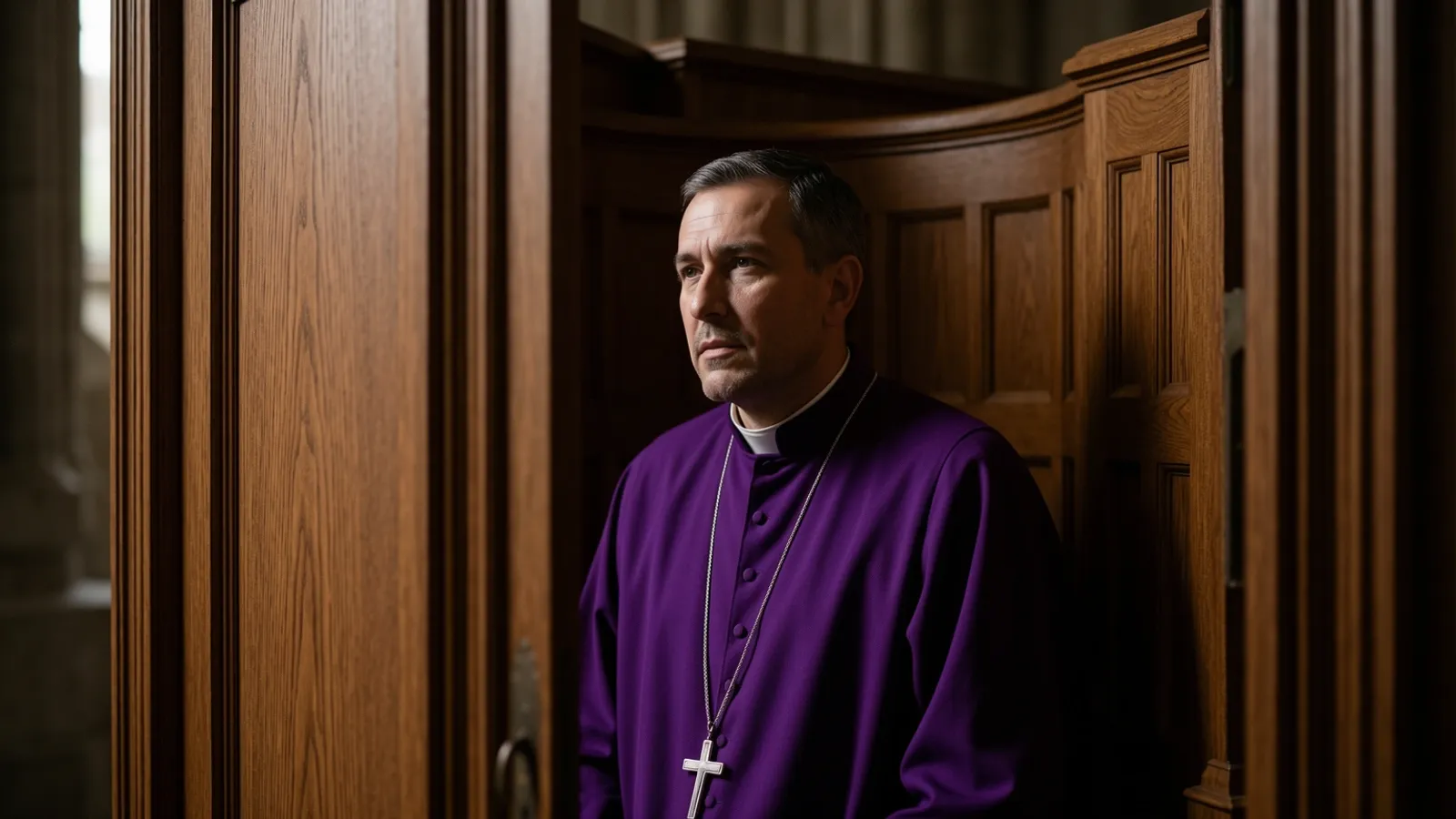
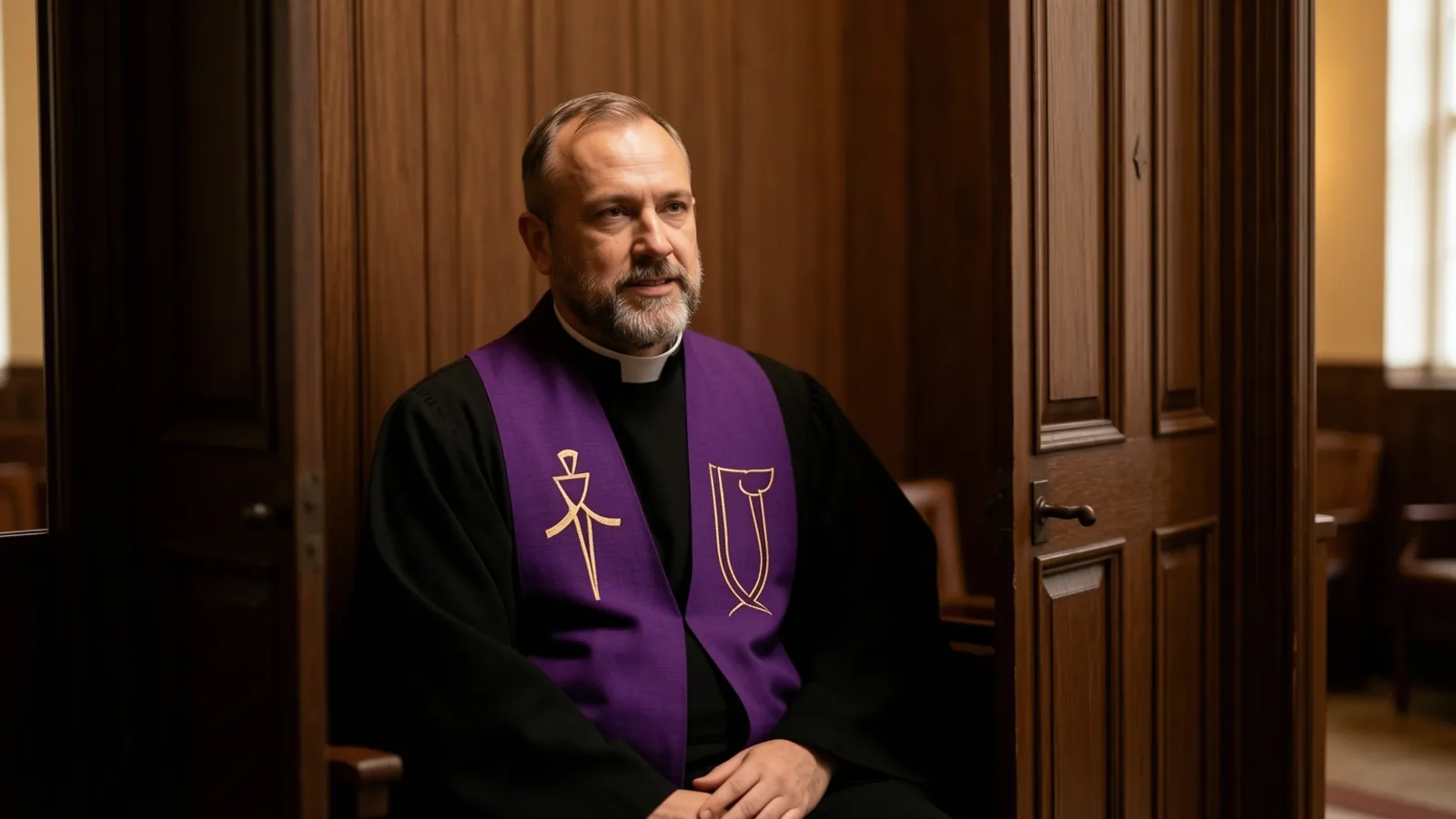
Once you have examined your conscience and stirred up contrition, you are ready to enter the confessional. Most parishes offer confession in two ways: behind a screen (for anonymity) or face-to-face. You are free to choose whichever makes you more comfortable. The priest will welcome you, and you should begin by making the Sign of the Cross. Then, use the traditional opening: "Bless me, Father, for I have sinned. It has been [length of time] since my last confession."
- State your sins clearly and concisely. Start with the most difficult or serious sins first. Do not try to hide them or use vague language.
- Include the number of times you committed each mortal sin to the best of your ability. For venial sins, you can mention those that are most frequent or troublesome.
- Listen to the priest's counsel. He may offer advice or ask clarifying questions to help you make a better confession.
- Accept the penance. The priest will assign a specific prayer or action for you to perform after leaving the confessional.
- Pray the Act of Contrition when the priest invites you to do so. You should say this prayer with sincerity and focus.
- Receive the absolution. While the priest prays the words of forgiveness, you can make the Sign of the Cross as he finishes with "I absolve you from your sins in the name of the Father, and of the Son, and of the Holy Spirit."
After leaving the confessional, you should immediately go to a quiet place in the church to perform your penance. This is also a good time to offer a prayer of thanksgiving for the mercy you have received. If your penance involves a specific prayer, you can find many traditional options in the Prayla app's prayer library. If you were assigned a task that takes time, such as making restitution, make a concrete plan to complete it as soon as possible. Following these steps of reconciliation ensures that the sacrament is completed with reverence.
What Happens During the Act of Confession
During the actual confession, a supernatural exchange takes place. While it may seem like you are just talking to a man, the Church teaches that you are standing at the foot of the Cross. The priest, though a sinner himself, has been given the power of the keys first promised to Saint Peter. This power allows him to bind and loose in the name of Christ. When you name your sins, you are bringing them out of the darkness and into the light of Christ's mercy. This act of naming is a form of spiritual warfare that strips the devil of his power over those specific areas of your life.
Whatever you bind on earth shall be bound in heaven, and whatever you loose on earth shall be loosed in heaven. Matthew 16:19
The priest's role is to be a physician and a judge. As a physician, he seeks to heal the wounds of the soul with the medicine of grace and advice. As a judge, he must determine if the penitent is truly sorry and disposed to receive absolution. This is why it is important to be honest; the priest cannot heal what he does not know. The Sacrament of Penance is often called the "Sacrament of Healing" because it restores the spiritual health of the soul, much like a doctor restores the physical health of the body.
The Words of Absolution
The most critical moment of the sacrament is the absolution. The priest extends his right hand toward the penitent and says: "God, the Father of mercies, through the death and resurrection of his Son has reconciled the world to himself and sent the Holy Spirit among us for the forgiveness of sins; through the ministry of the Church may God give you pardon and peace, and I absolve you from your sins in the name of the Father, and of the Son, and of the Holy Spirit." These words are efficacious; they actually do what they say. The guilt of sin is removed, and the soul is restored to a state of grace.
The Role of the Priest and the Seal of Confession
One of the most profound aspects of the Sacrament of Reconciliation is the Sacramental Seal. This is an absolute duty of the priest never to reveal anything he hears in confession, no matter the cost. This seal is inviolable; the Code of Canon Law (Canon 1388) states that a priest who directly violates the seal incurs an automatic excommunication that can only be lifted by the Holy See. This ensures that every Catholic can approach the sacrament with total confidence and peace of mind.
Saint John Nepomucene is a powerful historical example of this commitment. In 1393, he was the confessor to the Queen of Bohemia. When the King demanded to know what the Queen had confessed, John refused to speak. Despite being tortured and eventually thrown into the Vltava River to drown, he never broke the seal. He is now the patron saint of confessors and a witness to the sacredness of this silence. This level of protection is unique to the Catholic Church and reflects the belief that the confession is made to God alone, with the priest acting only as a witness and minister.
Because the priest acts in persona Christi, he is also bound to show the same mercy and compassion that Jesus showed to sinners. Whether he is a young priest or an elderly monk, his personal holiness does not affect the validity of the sacrament. This is the doctrine of ex opere operato, which means the sacrament works by the very fact of the action being performed. Even if a priest were in a state of sin himself, the absolution he gives remains valid because the power comes from Christ, not the man. This reality should encourage anyone who is hesitant to go to confession because they are afraid of the priest's judgment.
Doing Your Penance and Making Restitution
After receiving absolution, the sacrament is not entirely finished until the penance is performed. While the guilt of sin is forgiven and eternal punishment is removed, there remains a "temporal punishment" due to sin. This is the disorder left in the soul and the world by our bad actions. Penance is the way we begin to repair that disorder. It is an act of satisfaction that shows God we are serious about our conversion. Common penances include saying certain prayers, performing an act of charity, or making a sacrifice.
Restitution is a specific type of penance required when a sin has caused harm to another's property or reputation. If you have stolen something, you must return it. If you have damaged someone's character through gossip or lies, you must do what you can to restore their good name. The priest will often guide you on how to make proper restitution without causing further harm. This is a crucial part of making a good confession because it proves that our repentance is not just in words but in deeds.
Bear fruit that befits repentance. Matthew 3:8
Think of sin like a nail driven into a wooden board. Absolution is the act of pulling the nail out. The hole, however, still remains. Penance is the process of filling and sanding the hole so the wood is restored to its original beauty. While our penances can never "earn" God's forgiveness, which is a free gift, they join our small sufferings to the infinite merits of Christ. By performing our penance with love, we cooperate with God's grace to purify our souls and shorten our time in Purgatory.
Common Misconceptions About Catholic Confession
Many non-Catholics, and even some Catholics, misunderstand the nature of confession. A common objection is: "Why can't I just confess my sins directly to God?" The answer is that you should indeed confess your sins to God immediately after committing them. However, Christ established the visible Church and the sacramental system because we are physical beings who need visible signs of invisible grace. Confessing to a priest provides the audible assurance of forgiveness that a private prayer cannot. Furthermore, as mentioned earlier, Christ explicitly gave the power to forgive sins to His Apostles John 20:23.
Another misconception is that confession is a "license to sin." Some believe that Catholics think they can do whatever they want, go to confession, and then repeat the sin. This is a misunderstanding of contrition. As we have seen, a valid confession requires a firm purpose of amendment. If a person enters the confessional with the intention of committing the sin again, the confession is invalid. True confession leads to a slow but steady transformation of life, not a cycle of presumption.
Some also worry that the priest will be shocked by their sins. In reality, most priests have heard almost everything. They are trained to see sin as a spiritual disease to be cured, not a reason for personal disgust. In fact, many priests find hearing confessions to be one of the most rewarding parts of their ministry because they witness the prodigal son returning home. They are not there to judge you, but to help you find the way back to the Father's house. Understanding these truths is a key part of any catholic confession guide.
Overcoming Fear and Scrupulosity in Reconciliation
Fear is the greatest obstacle to the confessional. The devil knows that if he can keep you away from this sacrament, he can keep you in his power. He often uses shame to convince us that our sins are too big for God's mercy or that the priest will think less of us. To overcome this, we must remember that God's mercy is infinite. Saint Faustina, the apostle of Divine Mercy, recorded in her diary that the greater the sinner, the greater the right they have to God's mercy. No sin is so dark that the light of Christ cannot pierce it.
Scrupulosity is another challenge, where a person sees mortal sin where there is none or fears that they have not confessed "perfectly" enough. This is often called the "occupational hazard" of the spiritual life. If you struggle with scrupulosity, it is important to find a regular confessor and obey his guidance. He can help you distinguish between a true sin and a mere temptation or a passing thought. Trusting in the priest's judgment is a powerful act of humility that can heal the scrupulous mind.
Practical Steps for Beginners
If you have been away from the sacrament for a long time, perhaps years or even decades, the prospect of returning can be daunting. Do not let this stop you. The priest will be overjoyed to assist you. You might consider making an appointment for a general confession, which allows more time for counseling than a standard 5-minute slot during parish hours. Tell the priest immediately: "Father, it has been twenty years, and I don't know where to start." He will guide you through the entire process.
For those who are just starting a habit of regular confession, begin with the basics. Don't worry about being a saint overnight. Focus on the one or two habitual sins that are holding you back. As you experience the peace that comes from absolution, you will find it easier to return. You can use the Prayla app to set a reminder on your liturgical calendar for your monthly confession, ensuring it becomes a non-negotiable part of your routine. Over time, the fear will be replaced by a deep desire for the purity of heart that only Christ can give.
How to Confess Regularly for Spiritual Growth
To move beyond the minimum requirements and use confession as a tool for high-level spiritual growth, you must develop a plan of life. This involves not just avoiding mortal sin but actively rooting out venial sins and imperfections. This is the difference between surviving and thriving in the spiritual life. Advanced practitioners of the faith often go to confession weekly or every two weeks, mirroring the practice of many great saints like Saint John Paul II or Saint Teresa of Calcutta.
| Level | Frequency | Focus Area |
|---|---|---|
| Beginner | Monthly | Overcoming mortal sin; establishing the habit |
| Intermediate | Bi-weekly | Rooting out habitual venial sins; building virtue |
| Advanced | Weekly | Refining the interior life; seeking total union with God |
At this level, your examination of conscience becomes more subtle. You might look at your motivations: did you do a good deed to be seen by others? Did you neglect a small opportunity for charity? Using the Prayla app to track your daily progress and engage in prayer groups can provide the community support needed for this level of commitment. Regular confession at this frequency acts like a spiritual "fine-tuning," keeping the soul sensitive to the promptings of the Holy Spirit and preventing even the smallest dust of sin from settling on the heart.
Historical Development of the Sacrament
The way we celebrate the Sacrament of Reconciliation has changed over the centuries, though its essential elements have remained the same. In the early Church, for very grave sins like apostasy or murder, penance was often public and lengthy. Sinners would enter the "Order of Penitents" and perform rigorous fasts and prayers for months or even years before being readmitted to the Eucharist on Holy Thursday. This emphasized the communal impact of sin and the seriousness of the rupture with the Church.
In the 7th century, Irish monks began to popularize the practice of private confession, which they brought to continental Europe. This allowed for more frequent reception of the sacrament and offered a more personal form of spiritual direction. This shift was officially recognized and standardized by the Fourth Lateran Council in 1215, which mandated the annual confession for all the faithful. The Council of Trent later reaffirmed this practice against the attacks of the Reformers, defining the sacrament as we know it today.
Today, the Church continues to emphasize the importance of this sacrament in a world that has largely lost the sense of sin. The Sacrament of Penance remains the primary way for the 1.39 billion Catholics to find the peace of Christ. Whether it is through traditional confession in a dark box or a modern reconciliation room, the grace remains the same. By looking back at the history of the sacrament, we see the Church's constant concern for the salvation of souls and her desire to make God's mercy accessible to everyone, everywhere, at all times.
The Traditional Act of Contrition
O my God, I am heartily sorry for having offended Thee, and I detest all my sins because of Thy just punishments, but most of all because they offend Thee, my God, Who art all-good and deserving of all my love. I firmly resolve, with the help of Thy grace, to sin no more and to avoid the near occasions of sin. Amen.
Prayer
O Lord Jesus Christ, Redeemer of the world, behold, I, a most wretched sinner, prostrate myself at Thy feet. I offer Thee my confession in satisfaction for all my sins, and I trust in Thine infinite mercy and goodness, that Thou wilt graciously forgive me and give me grace to amend my life. Accept, O Lord, this my confession, and let it be unto me a means of salvation. Amen.
Further Reading
- Catechism of the Catholic Church, paragraphs 1422-1498
- Council of Trent, Decree on the Sacrament of Penance (Session XIV)
- Pope John Paul II, Apostolic Exhortation Reconciliatio et Paenitentia
- Code of Canon Law (1983), Canons 959-997
- Roman Catechism (Catechism of the Council of Trent), Part II: The Sacraments