Who Was Saint Athanasius
A Catholic Christian is a member of the Church founded by Jesus Christ who adheres to the fullness of the faith as transmitted through Sacred Scripture and Sacred Tradition. This identity is defined by the belief in the divinity of Christ and the Holy Trinity, a theological foundation that Saint Athanasius spent his entire life defending against heresy. To be a Catholic Christian is to remain in communion with the Magisterium and the Successor of Saint Peter.
Who Was Saint Athanasius
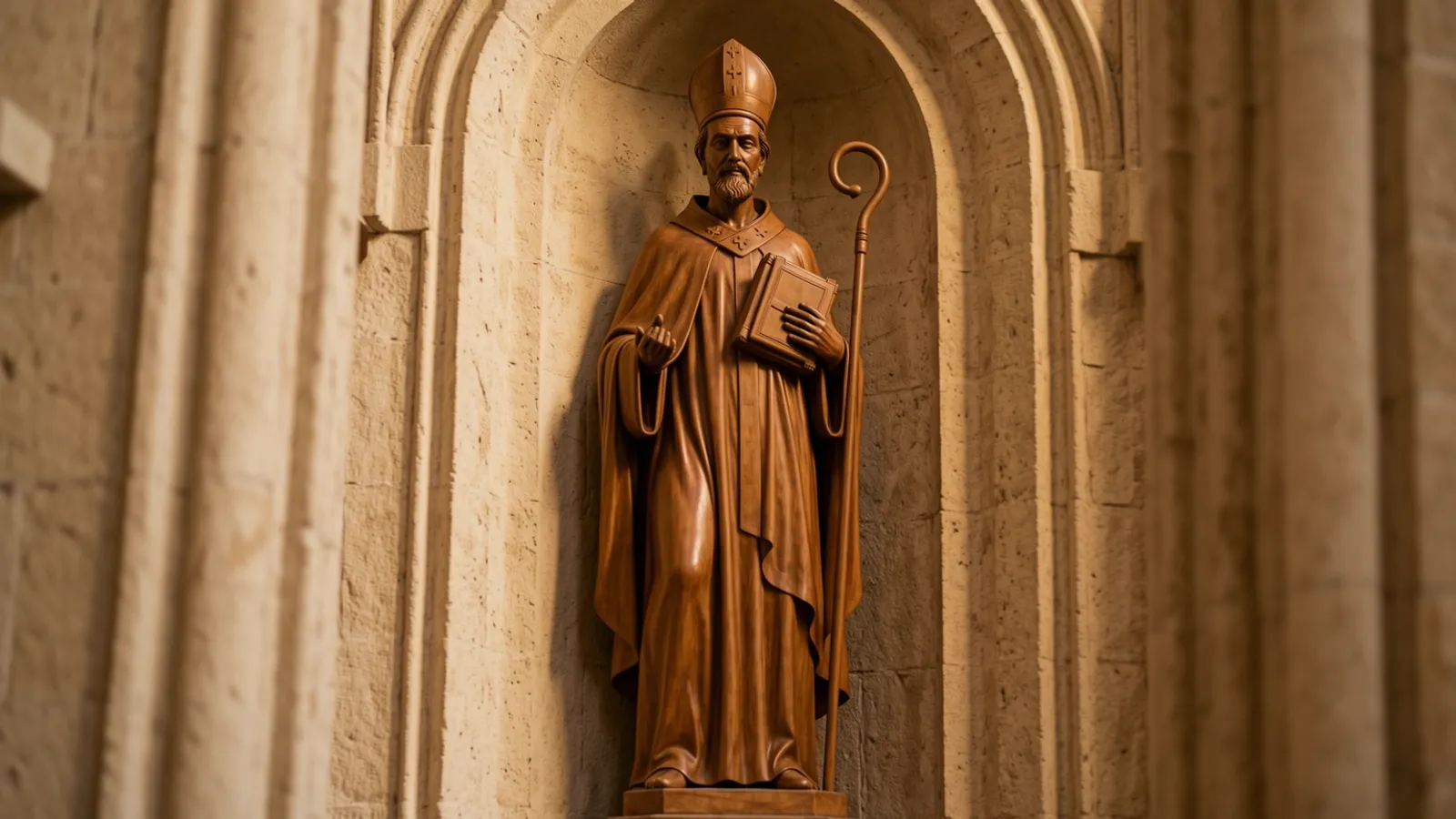
Saint Athanasius was the Bishop of Alexandria during the fourth century and is revered as the primary defender of the divinity of Jesus Christ against the Arian heresy. Known as the Father of Orthodoxy, he served the Church for 45 years as a bishop and was one of the most significant figures at the Council of Nicaea in 325 AD. His theological works and his steadfastness in the face of political persecution helped define the difference between Catholic and Christian explained in terms of true orthodox belief versus heretical deviations.
Athanasius lived during a pivotal era when the Roman Empire was transitioning from a persecutor of Christians to a protector of the faith. However, this transition brought new challenges as emperors frequently interfered in theological disputes. Athanasius was born around 296 AD or 298 AD in Alexandria, Egypt. This city was the intellectual and cultural center of the Mediterranean world at the time. He received a rigorous education in both Greek philosophy and Christian theology, which prepared him to articulate the faith with precision.
The life of Athanasius is a testament to the fact that the Catholic Christian faith is not a matter of personal opinion but of objective truth revealed by God. He understood that if Jesus Christ were not truly God, He could not have saved humanity. This conviction led him to endure five separate exiles and decades of hardship. He is celebrated as a Doctor of the Church, a title given to saints who have made a significant contribution to theology through their research, study, or writing. His legacy continues to guide the Church in its understanding of the Incarnation and the nature of the Triune God.
Early Life and Education in Alexandria
Saint Athanasius grew up in Alexandria, which was the second most important city in the Roman Empire and the home of a famous catechetical school. He was mentored by Bishop Alexander of Alexandria, who recognized the young man's sharp intellect and deep piety. According to pious tradition, Alexander first noticed Athanasius when he saw the boy playing on the beach with other children, imitating the Sacrament of Baptism. This early encounter led to Athanasius being taken into the bishop's household for training.
In the fourth century, Alexandria was a melting pot of ideas. Athanasius was exposed to Neoplatonism and other philosophical schools, but he remained firmly rooted in the Catholic Bible. He spent a significant amount of time in the desert with the first monks, including Saint Anthony of Egypt, whom he later wrote a biography about. This monastic influence gave him a spiritual discipline that would sustain him during the many years of conflict ahead. By the time he was a young deacon, Athanasius was already a formidable theologian.
His education was not merely academic but deeply pastoral. He saw how the faith was lived out in the lives of the martyrs who had suffered under the persecutions of Diocletian and Maximinus Daia. This history of sacrifice shaped his understanding of what it meant to be a Catholic Christian. To Athanasius, the faith was worth more than life itself. When the Arian heresy began to spread in Alexandria around 318 AD, Athanasius was ready to assist Bishop Alexander in defending the traditional teaching of the Church. He understood that the stakes were the salvation of souls, as a created being cannot bridge the gap between God and man.
The Rise of the Arian Heresy
The Arian heresy was a false teaching started by Arius, a priest in Alexandria, who claimed that Jesus Christ was a created being and not eternally God. Arius famously taught that there was a time when the Son was not, suggesting that the Word of God was the first and greatest of God's creations but not equal to the Father. This teaching was popular because it seemed to make Christianity more compatible with Greek logic and monotheistic philosophical ideas that struggled with the concept of a Triune God.
Arius used catchy songs and slogans to spread his errors among the common people, leading to widespread confusion in the Eastern Church. The Magisterium of the Church, led by Bishop Alexander, condemned these views, but Arius had powerful political allies. This crisis threatened to tear the Church and the Empire apart. The heresy was not just a philosophical disagreement; it struck at the heart of the Gospel. If Christ is not God, then His death on the Cross does not have infinite merit, and the Sacrament of Baptism does not truly unite us to the divine life.
Saint Athanasius recognized that Arianism was a return to paganism under a Christian veneer. By making Christ a secondary deity, Arius was essentially teaching a form of polytheism. Athanasius argued that the Catholic Christian must believe that the Son is of the same substance as the Father. He pointed to the liturgical life of the Church, noting that Christians had always prayed to Christ and worshipped Him as God. If Arius were right, the Church had been guilty of idolatry from the beginning. This internal consistency between prayer and belief, known as lex orandi, lex credendi, was a central pillar of Athanasius's defense.
Saint Athanasius at the Council of Nicaea
The Council of Nicaea, held in 325 AD, was the first ecumenical council of the Church and was called by Emperor Constantine to resolve the Arian controversy. Although Athanasius was only a deacon at the time, he attended as the secretary and advisor to Bishop Alexander. The Council brought together approximately 318 bishops from across the Christian world, many of whom bore the physical scars of the recent Roman persecutions. This gathering was a visible manifestation of the One, Holy, Catholic, and Apostolic Church.
The Homoousios Controversy
At the center of the debates was the Greek term homoousios, which means of the same substance or essence. Athanasius and the orthodox bishops insisted on this word to describe the relationship between the Father and the Son. The Arians preferred the term homoiousios, which meant of a similar substance. While only a single letter distinguished the two words in Greek, the theological difference was vast. Using homoousios ensured that Christ was recognized as consubstantial with the Father, a term we still use today when we pray the Nicene Creed during Mass.
We believe in one God, the Father Almighty, Maker of all things visible and invisible. And in one Lord Jesus Christ, the Son of God, begotten of the Father, Light of Light, very God of very God, begotten, not made, being of one substance with the Father. [Council of Nicaea, 325 AD]
The Council overwhelmingly condemned Arius and produced the Nicene Creed. Athanasius was instrumental in the drafting of this document, ensuring that the language was precise enough to exclude Arian interpretations. Despite the victory at Nicaea, the struggle was far from over. Many bishops signed the document under pressure and later returned to their Arian or semi-Arian views once they left the Council. Athanasius would spend the rest of his life ensuring that the Nicene faith was not just a signed piece of paper but a lived reality in the Church.
The Election as Bishop of Alexandria
Following the death of Bishop Alexander in 328 AD, Athanasius was elected as his successor by the clergy and the people of Alexandria. His election was met with great joy by the orthodox faithful but with immediate opposition from the Arian faction and the Melitians, a schismatic group in Egypt. As the Bishop of Alexandria, Athanasius held the second most influential see in the Church, with jurisdiction over all the bishops of Egypt and Libya. This position made him a primary target for those who wished to compromise the faith.
Athanasius was a dedicated pastor who traveled extensively throughout his diocese. He visited the monks in the Thebaid desert and maintained a close relationship with the burgeoning monastic movement. He understood that the holiness of the clergy and the religious was the best defense against heresy. During his early years as bishop, he focused on strengthening the local Church and implementing the decrees of Nicaea. He also began his practice of writing Festal Letters each year to announce the date of Easter, which he used as an opportunity to teach theology to his flock.
His role as bishop was not just administrative; it was a battle for the truth of Christ. The Arians began a campaign of character assassination against him, accusing him of everything from illegal taxation to murder. In one famous instance, they accused him of killing a bishop named Arsenius and using his severed hand for magic. Athanasius famously produced the living Arsenius at a council, showing both of the man's hands and shaming his accusers. Such were the lengths to which the enemies of the Catholic Christian faith would go to silence the Bishop of Alexandria. You can find more about the history of the early bishops by exploring the Saint Mark the Evangelist biography, as Mark was the founder of the See of Alexandria.
Athanasius Against the World
The phrase Athanasius contra mundum, or Athanasius against the world, describes his solitary stand for the truth when almost the entire political and ecclesiastical establishment had succumbed to Arianism. After the death of Constantine, his son Constantius II became the sole emperor. Constantius was a staunch supporter of Arianism and used his imperial power to force bishops to abandon the Nicene Creed. Those who refused were deposed, imprisoned, or exiled.
During this time, many bishops chose the path of least resistance. St. Jerome later wrote of this period that the world groaned and was astonished to find itself Arian. Athanasius, however, refused to compromise. He argued that the Emperor had no authority over matters of faith and that the Magisterium of the Church was independent of secular power. This stand was not out of stubbornness but out of a clear understanding that the Deposit of Faith belongs to God, not to the state. His resistance served as a model for future generations of Catholics facing state-sponsored pressure to change Church teaching.
Athanasius sought support from the Bishop of Rome, Pope Julius I. The Pope held a council in Rome that vindicated Athanasius and reaffirmed the Nicene faith. This historical moment highlights the importance of the Papacy as the final arbiter of orthodoxy. Even when the Eastern bishops were in turmoil, the See of Peter remained a rock of stability. Athanasius's appeal to Rome is a clear early example of the Petrine Office being used to protect the universal Church from local heresies. To understand more about the role of the Church in defining doctrine, you can read about the difference between Catholic and Christian explained in our detailed theology guide.
The Five Exiles of Saint Athanasius
Saint Athanasius spent a total of 17 years in exile across five different occasions. Each exile was a direct result of his refusal to admit Arians to communion or to sign heretical creeds. His life became a cycle of being restored to his see by one emperor and being chased out by the next. These exiles took him to the furthest reaches of the Roman Empire, from the banks of the Rhine in modern-day Germany to the hidden caves of the Egyptian desert.
| Exile Number | Dates | Opposing Emperor | Location of Exile |
|---|---|---|---|
| First Exile | 335–337 AD | Constantine I | Trier (Gaul) |
| Second Exile | 339–346 AD | Constantius II | Rome (Italy) |
| Third Exile | 356–361 AD | Constantius II | Egyptian Desert |
| Fourth Exile | 362–363 AD | Julian the Apostate | Egyptian Desert |
| Fifth Exile | 365–366 AD | Valens | Ancestral Tomb near Alexandria |
His second exile in Rome was particularly significant because it introduced the Roman Church to the Egyptian monastic tradition. Athanasius brought two monks with him, and their stories of the desert fathers inspired many in the West to embrace the religious life. His third exile was the most dangerous; imperial troops attacked his cathedral during a vigil service, and Athanasius narrowly escaped into the desert. He lived among the monks for six years, writing his most important theological works in secret while the monks protected him from the emperor's spies.
Even in his final exile under the Arian emperor Valens, Athanasius remained undeterred. He hid in his father's tomb for four months until the people of Alexandria threatened to revolt, forcing the emperor to allow him to return. This period of his life demonstrates the virtue of fortitude. He did not view his exiles as a defeat but as a participation in the Suffering of Christ. He continued to govern his diocese through letters, ensuring that the Daily Mass Readings and the liturgical life of his people remained orthodox.
On the Incarnation of the Word
One of the most important books ever written by a Catholic Christian is Athanasius's treatise De Incarnatione Verbi, or On the Incarnation of the Word. Written before the Arian controversy reached its peak, this work explains why it was necessary for God the Son to become man for our salvation. Athanasius argues that humanity, through sin, had fallen into corruption and death, losing the image of God in which we were created. Only the Creator Himself could restore what had been broken.
The Divine Dilemma
Athanasius describes a Divine Dilemma. God could not simply ignore sin, for He is just and true; but He could not allow His creation to perish, for He is good and loving. The solution was the Incarnation. By taking a human body, the Word could pay the debt of death on behalf of all humanity while simultaneously renewing the divine image in us. Athanasius famously summarized this exchange by stating that God became man so that man might become god, referring to the process of divinization or theosis where we are invited to share in the divine nature through grace.
For He was made man that we might be made God; and He manifested Himself by a body that we might receive the idea of the unseen Father; and He endured the insolence of men that we might inherit immortality. [St. Athanasius, On the Incarnation, 54]
This work remains a cornerstone of Christology. It emphasizes that the Catholic Bible teaches a Savior who is fully God and fully man. Athanasius uses the analogy of a king entering a city; even though he stays in only one house, the entire city is honored and protected. Similarly, by the Word inhabiting one human body, the entire human race is raised to a new dignity. This teaching is essential for understanding the Sacrament of the Eucharist, where we receive the incarnate Lord.
The Defense of the Nicene Creed
Throughout his life, Athanasius was the primary architect of the Nicene Creed's survival. He understood that the Creed was not a new invention but a summary of the faith of the Apostles. He spent decades explaining the term homoousios to those who were confused or misled by Arian propaganda. He argued that if we do not use precise language, we end up worshipping a god of our own making rather than the God who has revealed Himself.
Athanasius also defended the divinity of the Holy Spirit. As the Arian controversy evolved, some groups, known as the Pneumatomachians, accepted the divinity of the Son but denied the divinity of the Spirit. Athanasius wrote a series of letters to Bishop Serapion of Thmuis, arguing that the Trinity is indivisible. If the Holy Spirit is not God, then our sanctification is not a work of God, and our Sacrament of Baptism in the name of the Father, Son, and Holy Spirit would be nonsensical. This defense paved the way for the Council of Constantinople in 381 AD, which further defined the divinity of the Spirit.
The Athanasian Creed, though likely written by a later follower in the fifth century, bears his name because it perfectly encapsulates his theological spirit. It is a detailed profession of faith regarding the Trinity and the Incarnation. It begins with the stern warning that anyone who wishes to be saved must hold the Catholic faith whole and inviolate. While modern sensibilities sometimes find such language harsh, Athanasius viewed it as an act of charity. To him, telling the truth about God was the most important thing a person could do for their neighbor's soul.
Excerpts from the Athanasian Creed
Whosoever will be saved, before all things it is necessary that he hold the Catholic Faith. Which Faith except everyone do keep whole and undefiled, without doubt he shall perish everlastingly. And the Catholic Faith is this: That we worship one God in Trinity, and Trinity in Unity; Neither confounding the Persons, nor dividing the Substance. For there is one Person of the Father, another of the Son, and another of the Holy Ghost. But the Godhead of the Father, of the Son, and of the Holy Ghost, is all one, the Glory equal, the Majesty co-eternal. Such as the Father is, such is the Son, and such is the Holy Ghost. The Father uncreate, the Son uncreate, and the Holy Ghost uncreate.
Saint Athanasius and the Monastic Movement
Saint Athanasius played a crucial role in the spread of monasticism throughout the Church. During his third exile, he lived with the monks in the Egyptian desert, where he witnessed their lives of prayer, fasting, and radical poverty. He became a close friend of Saint Anthony the Great, the father of all monks. When Anthony died, he left one of his two sheepskin cloaks to Athanasius, a gesture of profound spiritual friendship and solidarity.
Friend of the Desert Fathers
Athanasius wrote the Life of Saint Anthony, which became an immediate bestseller in the ancient world. This biography did more to promote the monastic life than any other document. It showed that the Catholic Christian life could be lived to its fullest through the renunciation of the world. Athanasius portrayed Anthony not just as a hermit but as a hero who fought demons and defended the faith. When Arianism threatened the Church, Anthony emerged from the desert to stand beside Athanasius in Alexandria, proving that the monks were the guardians of orthodoxy.
By bringing the stories of the desert fathers to the West during his exiles in Rome and Trier, Athanasius helped establish the foundations of Western Monasticism. Figures like Saint Augustine were deeply moved by the life of Anthony. Athanasius taught that the goal of the Christian life is union with God, and that prayer is the primary means to achieve this. Today, Catholics can use the Prayla Liturgy of the Hours to participate in that same tradition of structured, daily prayer that Athanasius championed among the monks.
The relationship between the bishop and the monks was mutually beneficial. The monks provided Athanasius with a spiritual refuge and a network of support that the emperor's soldiers could not penetrate. In return, Athanasius provided the monks with a sound theological framework for their mystical experiences. He ensured that monasticism remained an integral part of the Catholic Church rather than drifting into fringe or gnostic movements. This synergy between the hierarchy and the charismatic life of the desert was essential for the survival of the faith during the Arian crisis.
The Saint Athanasius Feast Day and Legacy
The feast day of Saint Athanasius is celebrated on May 2nd in the General Roman Calendar. This date marks the anniversary of his death in 373 AD. For Catholics, a feast day is not just a historical commemoration but a day to seek the intercession of the saint and to reflect on their virtues. Athanasius is the patron saint of theologians and those who suffer for the faith. His life reminds us that the majority is not always right and that the truth of the Magisterium must be upheld even when it is unpopular.
Athanasius's legacy is found in every prayer of the Nicene Creed. Every time we profess that Jesus is God from God, Light from Light, we are using the language he fought to preserve. He was also the first person to list the 27 books of the New Testament exactly as we have them today. In his 39th Festal Letter, written in 367 AD, he identified the canon of Scripture, distinguishing the inspired books from those that were merely useful for reading. This was a monumental contribution to the stability of the Catholic Bible.
In the year 2026, the feast of Saint Athanasius falls on a Saturday. Catholics can honor him by reading his works or by praying for those who are currently being persecuted for their faith. His example is particularly relevant in times of theological confusion. He showed that the way to navigate a crisis is to return to the Sacred Tradition and the clear teaching of the Church. By consulting the Prayla Liturgical Calendar, you can stay informed about feast days like this and find resources for daily prayer and reflection.
Why Saint Athanasius Is a Doctor of the Church
Saint Athanasius was officially declared a Doctor of the Church by Pope Pius V in 1568. This designation is reserved for saints whose writings have significantly benefited the entire Church. He is one of the four great Greek Doctors, alongside Saint Basil the Great, Saint Gregory Nazianzen, and Saint John Chrysostom. His primary contribution was the clarification of Christological dogma, ensuring that the Church never lost sight of the true nature of its Founder.
Athanasius's theology was not abstract; it was based on the reality of salvation. He argued that if Christ is a creature, He cannot recreate us. If Christ is not God, He cannot bring us to God. This soteriological focus (theology of salvation) made his writings accessible and powerful. He used the Catholic Bible as his primary source, weaving together passages from the Old and New Testaments to show the continuity of God's plan. His interpretation of Proverbs 8 and John 1 became the standard for orthodox exegesis.
Furthermore, Athanasius's defense of the faith was marked by a remarkable intellectual courage. He was not afraid to challenge emperors or powerful bishops. However, he was also known for his kindness and pastoral heart. He was willing to accept back into communion those who had signed heretical documents out of fear, provided they sincerely repented and embraced the Nicene faith. This balance of firmness in truth and mercy toward the weak is the hallmark of a true Doctor of the Church. His life proves that being a Catholic Christian requires both a sharp mind and a compassionate soul.
Common Misconceptions About Saint Athanasius
One common misconception is that Saint Athanasius and the Council of Nicaea "invented" the divinity of Christ. Secular historians or non-Catholic critics sometimes claim that before the fourth century, Christians viewed Jesus only as a great teacher and that Constantine imposed the idea of His divinity for political unity. This is historically false. Athanasius argued from the Sacred Tradition that the Church had always worshipped Christ as God. The Council did not create a new belief; it used a new word (homoousios) to protect an old belief from a new error.
Another misunderstanding is that Athanasius was a power-hungry politician who used theology to advance his own career. Critics point to his frequent conflicts with emperors as evidence of his ambition. However, a review of the historical facts shows that Athanasius's actions consistently led to his own suffering and loss of status. He spent nearly a third of his episcopacy in exile. If he were seeking power, the easiest path would have been to compromise with the Arian emperors, as many other bishops did. His life was one of constant sacrifice for the sake of the truth.
Finally, some suggest that the Arian controversy was just a petty dispute over Greek grammar. To the modern secular mind, the difference between "same substance" and "similar substance" seems insignificant. But Athanasius understood that this was a life-or-death issue for the soul. If Jesus is only similar to God, then we are still separated from God. Only if He is the same as God can He truly reconcile us to the Father. Athanasius was not fighting over a letter; he was fighting for the reality of our redemption.
Practical Lessons for the Modern Catholic Christian
The life of Saint Athanasius provides a roadmap for living the faith in a world that is often hostile to Catholic truth. Whether you are a beginner or advanced in your spiritual life, his example offers specific ways to grow in holiness and fidelity to the Church.
- Beginner Level: Focus on learning the Nicene Creed and understanding what each phrase means. When you pray it at Mass, do so with the awareness that men like Athanasius suffered greatly so that you could have these words. Start a habit of reading the Gospel of John to see the divinity of Christ for yourself.
- Intermediate Level: Study Athanasius's book On the Incarnation. It is surprisingly short and readable. Practice the virtue of fortitude by standing up for Catholic moral or dogmatic teachings in your workplace or social circles, even if it brings social discomfort. Use the Prayla Catholic Bible to look up the verses Athanasius used to defend the faith.
- Advanced Level: Adopt a more disciplined prayer life inspired by the monastic tradition. This might include praying the Liturgy of the Hours or spending time in Eucharistic Adoration. Consider how you can support the Church in areas where it is being persecuted, following Athanasius's example of solidarity with the suffering members of the Body of Christ.
Athanasius teaches us that the Catholic Christian identity is built on the rock of Christ's divinity. Without this, our prayers are empty and our sacraments are mere symbols. By holding fast to the truth, even when we are in the minority, we share in the victory of Christ over the world. Athanasius died in his own bed, surrounded by his faithful clergy, a sign that God rewards those who remain faithful to the end. His life proves that one man with the truth is more powerful than an empire with a lie.
Comparison of Theological Positions
| Feature | Arianism | Catholic Orthodoxy (Nicene) |
|---|---|---|
| Nature of the Son | Created being, first of all creation | Uncreated, eternally begotten |
| Relationship to Father | Heteroousios (different substance) | Homoousios (same substance) |
| Eternity | "There was a time when He was not" | Co-eternal with the Father |
| Salvation | A creature can save other creatures | Only God can save humanity |
| Worship | Worshipping a highly exalted creature | Worshipping the true God |
Prayer
Almighty and eternal God, who raised up thy Bishop Saint Athanasius as an outstanding champion of thy Son's divinity: mercifully grant that, rejoicing in his teaching and protection, we may never cease to grow in the knowledge and love of thee. Through our Lord Jesus Christ, thy Son, who liveth and reigneth with thee in the unity of the Holy Ghost, one God, for ever and ever. Amen.
Further Reading
- Catechism of the Catholic Church, Paragraphs 240-252 (The Dogma of the Holy Trinity)
- St. Athanasius, On the Incarnation of the Word
- Council of Nicaea (325 AD), Dogmatic Decrees
- Pope Benedict XVI, General Audience on Saint Athanasius (June 20, 2007)
- St. Athanasius, Life of Saint Anthony