Saint Mark the Evangelist
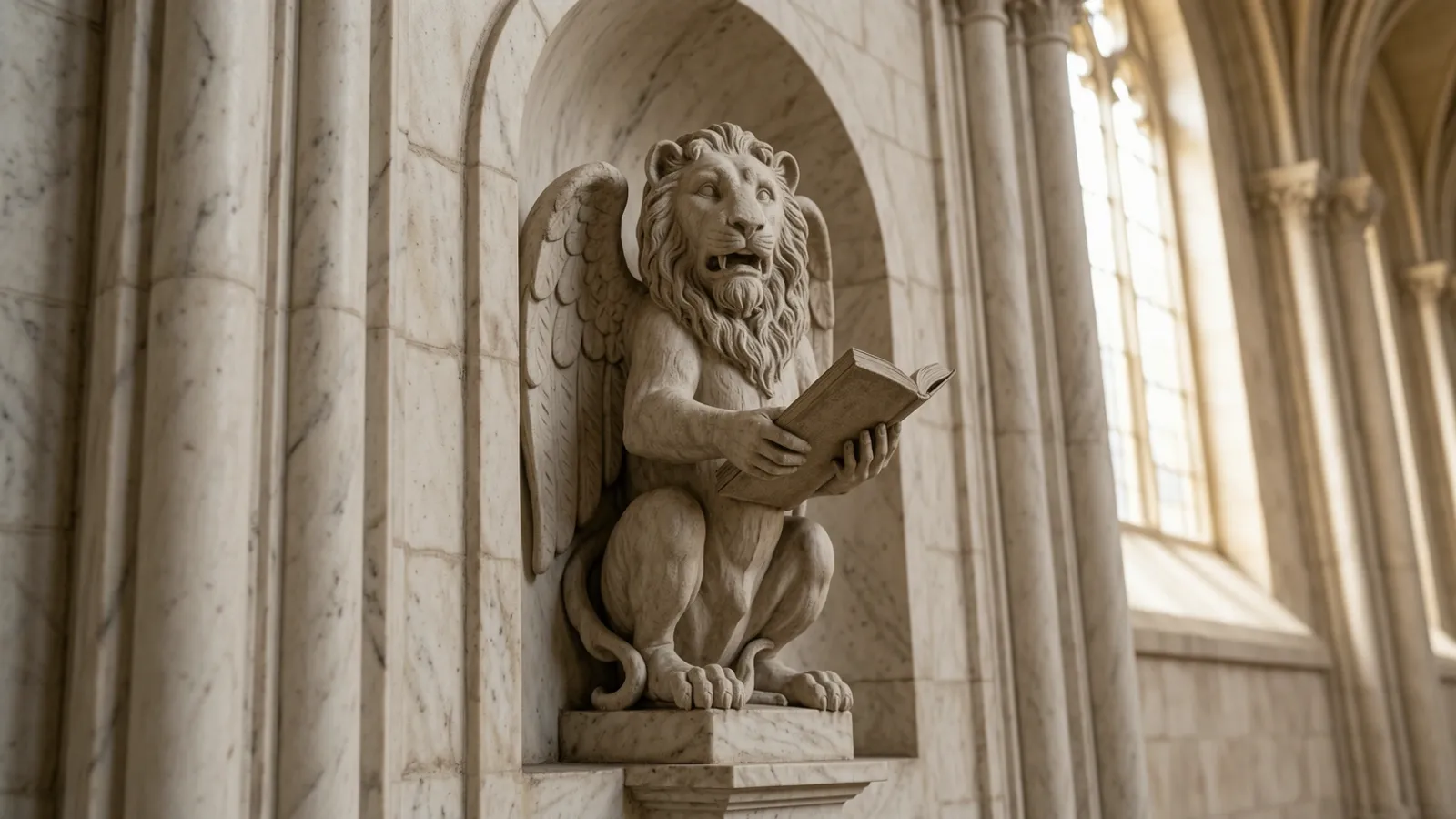
The winged lion is the primary symbol of Saint Mark the Evangelist, and many Catholics ask what is the meaning of this symbol when they see it in cathedral architecture or liturgical art. This symbol represents the royal dignity of Christ, His Resurrection, and the "voice of one crying in the wilderness" described at the beginning of the Gospel of Mark. Saint Mark, who founded the Church in Alexandria, is celebrated on his feast of st mark on April 25, and his life serves as a bridge between the ministry of Saint Peter and the growth of the early Church in Africa and Europe.
The Life and Biography of Saint Mark
Saint Mark was a Jewish convert to the faith and is widely identified in the New Testament as John Mark, the son of Mary, a woman whose home in Jerusalem served as a prominent meeting place for the early Christian community. This home was of such significance that many traditions identify it as the location of the Upper Room where the Last Supper was held and where the Apostles gathered during Pentecost. The biography of st mark is a journey from the center of Jerusalem to the frontiers of the Roman Empire, demonstrating the rapid expansion of the Gospel in the first century.
Mark was a cousin of Saint Barnabas, and he accompanied Barnabas and Saint Paul on their first missionary journey. However, a point of historical tension arose when Mark departed from them in Pamphylia to return to Jerusalem, an act that initially caused a rift between Paul and Barnabas. This detail, recorded in Acts 15:37-39, highlights the human reality of the early Church leaders. Despite this early departure, the st mark the evangelist of later years became a trusted companion to Saint Paul during his Roman imprisonment, showing a beautiful story of reconciliation and growth in virtue.
In his later life, Mark became the secretary and interpreter for Saint Peter. The early Church historian Papias, writing around the year 130 AD, confirms that Mark wrote his Gospel based on the preaching of Peter. This connection is vital because it anchors the second Gospel in the direct apostolic eyewitness testimony of the Prince of the Apostles. Mark eventually traveled to Egypt, where he became the first Bishop of Alexandria, establishing one of the most important sees in Christendom. His life ended in martyrdom in 68 AD, where he was killed for his refusal to worship the pagan gods of the Egyptians. Catholics can look to his life as an example of how God uses our initial hesitations and failures to eventually build a pillar of the Church.
The Relationship Between Saint Mark and Saint Peter
Saint Mark is often called the interpreter of Saint Peter because he served as the primary scribe for the Apostle's oral teachings. This relationship was not merely professional but deeply paternal, as evidenced by Saint Peter's own words in the New Testament. Peter refers to the Evangelist with affection, calling him "my son," which indicates a spiritual fatherhood that likely began with Mark's baptism or his early formation in the faith.
The church that is at Babylon, elected together with you, saluteth you: and so doth my son Mark. 1 Peter 5:13
This bond between the two men is the foundation of the Gospel of Mark. While Matthew wrote primarily for a Jewish audience and Luke for a Greek audience, Mark wrote his account for the Roman Christians who were hearing Peter preach. Because Peter was an eyewitness to the Transfiguration, the miracles, and the Passion, the Gospel of Mark is characterized by a vivid and immediate style that captures the urgency of Peter's message. Mark does not focus on long discourses but on the actions of Jesus, often using the Greek word euthys, which means "immediately" or "at once."
In Rome, the early Christians begged Mark to write down the teachings of Peter so they would have a permanent record. This request led to the creation of the first written Gospel, which many scholars believe served as a source for the later Gospels of Matthew and Luke. The influence of Peter is visible in how the Gospel handles Peter's own failures; it does not shy away from his denial of Christ, which suggests a humble transparency encouraged by Peter himself. To learn more about how the early Church grew through such leadership, you can read about the difference between Catholic and Christian explained in our historical guides. By serving Peter, Mark ensured that the foundational memories of the Church would never be lost to time.
The Meaning of the Winged Lion Symbol
When examining the winged lion symbol, we find a rich theological depth that connects the Old Testament prophecies to the reality of Jesus Christ. The Church Fathers, particularly Saint Jerome and Saint Gregory the Great, assigned the four living creatures from the Book of Ezekiel and the Book of Revelation to the four Evangelists. Mark was given the lion because his Gospel begins with the ministry of Saint John the Baptist, who is the "voice of one crying in the wilderness."
Why a Lion?
The lion is the king of beasts, representing royal power and courage. In the ancient world, the lion was believed to sleep with its eyes open, which the Church Fathers saw as a symbol of Christ in the tomb; His body slept in death, but His divinity remained awake and active. The lion also points to the "Lion of the Tribe of Judah," a messianic title for Jesus. Mark emphasizes the kingship of Christ, showing Him as the powerful Son of God who has authority over demons, nature, and death itself.
Why the Wings?
The wings attached to the lion signify that the Gospel is not a mere earthly record but a divine revelation that comes from heaven. The wings represent the speed with which the Word of God spreads and the elevation of the human mind toward heavenly things. In artistic depictions, the winged lion often holds a book or a scroll, which represents the Gospel itself. The most famous inscription found in these depictions is the Latin phrase Pax tibi Marce, evangelista meus, which means "Peace to you, Mark, my evangelist."
| Symbol Element | Theological Meaning |
|---|---|
| The Lion | Represents the royalty of Christ and the voice in the wilderness. |
| The Wings | Symbolize divine inspiration and the swiftness of the Gospel message. |
| The Halo | Indicates the sanctity and heroic virtue of the Evangelist. |
| The Book | Represents the written Word of God and the authority of the Gospel. |
Connection to the Prophet Ezekiel
The origins of the winged lion symbol are found in the mystical visions of the Old Testament. In the first chapter of the Book of Ezekiel, the prophet describes a vision of four living creatures, each having four faces: the face of a man, a lion, an ox, and an eagle. These creatures accompanied the chariot of God’s glory, representing the various aspects of God’s creation and His governance over the world.
As for the likeness of their faces, they four had the face of a man, and the face of a lion on the right side: and they four had the face of an ox on the left side; they four also had the face of an eagle. Ezekiel 1:10
The Church, guided by the Holy Spirit, eventually saw these four faces as prefiguring the four Evangelists who would carry the Gospel to the four corners of the earth. Saint Mark is associated with the face of the lion because the lion represents the desert, where Mark begins his narrative. By linking the Evangelists to Ezekiel's vision, the Church teaches us that the New Testament is the fulfillment of the Old. The same God who appeared to the prophets in the Babylonian exile is the God who speaks through the Gospel of Mark.
This connection reminds us that the Catholic Bible is a unified whole, where the types and shadows of the past are made clear in the light of Christ. When we use the Catholic Bible features in Prayla to study these passages, we see how the lion of Ezekiel's vision becomes the Evangelist who boldly proclaims the Resurrection. The lion’s roar is the proclamation that the Kingdom of God is at hand, a theme that dominates the first chapter of Mark's writing.
The Winged Lion in the Book of Revelation
The imagery of the winged lion reappears in the final book of the Bible, the Book of Revelation, where Saint John the Apostle describes the heavenly liturgy. Around the throne of God, there are four living creatures who never cease to give glory to the Almighty. These creatures are described as being full of eyes and having six wings, and the first of them is like a lion.
And the first beast was like a lion, and the second beast like a calf, and the third beast had a face as a man, and the fourth beast was like a flying eagle. Revelation 4:7
This heavenly context elevates the winged lion symbol from a simple artistic motif to a liturgical reality. It suggests that the work of the Evangelist is not just a historical task but a participation in the eternal worship of God. When Saint Mark wrote his Gospel, he was acting as a minister of the heavenly sanctuary, bringing the truth of God down to man so that man might be lifted up to God. The presence of the lion at the throne of God signifies that the boldness of the Gospel is a reflection of God’s own sovereign power.
For Catholics, this means that every time we hear the Gospel proclaimed at Mass, we are joining the angels and the living creatures in their cry of "Holy, Holy, Holy." The symbol of the lion encourages us to have a fearless faith. Just as the lion does not tremble before other beasts, the Christian who is nourished by the Gospel of Mark should not tremble before the world. This liturgical connection is why the Church places such high honor on the reading of the Gospel, often surrounding the book with candles and incense to show its divine origin.
Saint Mark as the Founder of the Church in Alexandria
After his time in Rome with Saint Peter, tradition holds that Saint Mark was sent to Egypt to evangelize the great city of Alexandria. At the time, Alexandria was a global center of learning and culture, second only to Rome in importance. By founding the Church there, Mark brought the light of Christ to the intellectual heart of the ancient world. He is considered the first Bishop of Alexandria, and the Coptic Orthodox Church and the Greek Orthodox Church of Alexandria both trace their lineage back to him.
In Alexandria, Mark performed many miracles, the most famous of which involved the healing of a cobbler named Anianus. According to the tradition, Mark was entering the city when his sandal tore. He took it to Anianus to be repaired, and while working, the cobbler pierced his hand with an awl. Anianus cried out, "Heis ho Theos" (God is one). Mark used this as an opportunity to preach the Gospel, healed the man's hand instantly, and eventually baptized him. Anianus later succeeded Mark as the second bishop of the city.
Mark also established the Catechetical School of Alexandria, which would later produce great theologians like Clement of Alexandria and Origen. This school was the first of its kind, dedicated to the systematic study of the faith and its relationship to philosophy. Mark's work in Egypt demonstrates that the Gospel is meant for all cultures and that faith and reason are not enemies. He laid the foundation for a vibrant Christian community that would survive centuries of persecution. If you are interested in the early foundations of the faith, you can explore what the Bible says about baptism to see the primary sacrament Mark would have administered to these early converts.
The Martyrdom of Saint Mark
The life of Saint Mark ended in a heroic witness to the faith. In the year 68 AD, during the season of Easter, the pagan inhabitants of Alexandria were celebrating a festival for the god Serapis. Mark, who had been denouncing the worship of idols, was seized by a mob while he was celebrating the Holy Sacrifice of the Mass. They tied a rope around his neck and dragged him through the streets of the city, through rocky areas and over sharp stones, until he was nearly dead.
He was thrown into prison for the night, where he was comforted by a vision of an angel and then by the Lord Jesus Himself. The next morning, the mob returned and dragged him through the city again until he finally gave up his soul to God. His last words were, "Into thy hands, Lord, I commend my spirit," echoing the words of Christ on the Cross. The pagans intended to burn his body, but a great storm arose, allowing the Christians to rescue his remains and give them a proper burial in the church they had built.
Historical Details of the Martyrdom
According to the Acts of Mark, an ancient document detailing his end, the martyrdom occurred on the 24th or 25th of the month of Pharmuthi in the Egyptian calendar. The site of his death, known as Baucalis, became a place of great pilgrimage. The sheer brutality of his death, being dragged for two days—earned him the title of "Megalomartyr" in the Eastern traditions. His blood is considered the seed of the Church in Egypt, which remained a powerhouse of Christian thought for the first millennium of Church history.
This martyrdom is why Saint Mark is often depicted with a palm branch, the symbol of victory through suffering. His death was not a defeat but a triumph, as he joined the ranks of the Apostles in the heavenly kingdom. Catholics today can find strength in his example, especially when facing social pressure to compromise their faith. Mark's refusal to honor false gods reminds us that our primary allegiance is always to the True God and Jesus Christ whom He has sent.
Relics and the Translation to Venice
One of the most fascinating chapters in the history of Saint Mark concerns his relics. For centuries, his body remained in Alexandria, but in the year 828 AD, two Venetian merchants named Buono da Malamocco and Rustico da Torcello decided to "rescue" the body from the city, which was then under Islamic rule. They feared that the church where he lay would be destroyed or the relics desecrated.
They successfully smuggled the body out of Alexandria by hiding it in a basket under layers of pork, which the Muslim customs officials refused to touch. This event is known as the Translation of Saint Mark. When the body arrived in Venice, it was received with massive celebration, and the city adopted Saint Mark as its patron saint, replacing Saint Theodore. The great Basilica di San Marco was built to house his remains, and the winged lion became the official symbol of the Republic of Venice.
Today, the relics of Saint Mark are still kept under the high altar of the Basilica in Venice. This history teaches us about the veneration of relics, which is a long-standing Catholic practice. We do not worship the bones of the saints, but we honor them as the temples of the Holy Spirit and as a physical connection to the heroes of our faith. The presence of Saint Mark in Venice made the city a major stop on the medieval pilgrimage routes, connecting the West to the apostolic foundations of the East. You can find many Catholic prayers for the Easter season that honor the victory of the martyrs during this liturgical time.
The Feast of Saint Mark on April 25
The Church celebrates the feast of st mark on April 25 each year. In the traditional Roman Calendar, this day was also known as the Greater Rogation Day. On this day, the faithful would participate in a solemn procession and chant the Litany of the Saints to ask for God’s mercy, protection from calamities, and a fruitful harvest. While the Rogation aspects are less common today, the feast remains a significant moment in the liturgical year to honor the Evangelist.
Because the feast falls during the Easter season, the liturgy is filled with "Alleluias" and focuses on the joy of the Resurrection that Mark so boldly proclaimed. The color of the vestments for the day is red, symbolizing his martyrdom. The Gospel reading for the feast is usually taken from Mark 16:15-20, which contains the Great Commission where Jesus tells His disciples to "Go ye into all the world, and preach the gospel to every creature."
Catholics are encouraged to attend Mass on this day or at least spend time reading from the Gospel of Mark. It is a day to pray for the Church in Egypt and for all those who work in the ministry of communications and publishing, as Mark is their patron. The liturgical calendar is a gift that allows us to walk with the saints throughout the year, and Mark's feast provides a pause to reflect on the power of the written Word. You can track this and other important dates using the liturgical calendar feature on Prayla to stay connected to the life of the Church.
Comparison with the Other Evangelists
To understand the unique contribution of Saint Mark, it is helpful to compare him with the other three Evangelists: Matthew, Luke, and John. Each writer had a specific audience and a specific theological focus, which is why they are each assigned a different symbol. This variety provides a complete portrait of Christ that no single Gospel could achieve on its own.
| Evangelist | Symbol | Primary Audience | Key Theme |
|---|---|---|---|
| Matthew | Winged Man | Jewish Christians | Jesus as the New Moses and Messiah |
| Mark | Winged Lion | Roman Christians | Jesus as the Suffering Servant and King |
| Luke | Winged Ox | Greek Gentiles | Jesus as the Compassionate Savior |
| John | Rising Eagle | Universal Church | Jesus as the Eternal Word of God |
Mark’s Gospel is the shortest of the four, consisting of only 16 chapters. It is often called the "Gospel of Action" because it focuses more on what Jesus did than on what He said. While Matthew includes the long Sermon on the Mount, Mark moves quickly from one miracle to the next. This pace would have appealed to the Roman mind, which valued efficiency, strength, and authority.
By comparing these symbols, we see that the four living creatures cover the totality of Christ’s life: He was born as a man (Matthew), He died as a sacrificial ox (Luke), He rose as a powerful lion (Mark), and He ascended into heaven like an eagle (John). Saint Mark’s specific role was to capture the power of the Resurrection and the urgency of the call to discipleship. For those beginning their journey in the faith, learning how to pray the rosary while meditating on these Gospel mysteries is an excellent way to internalize these truths.
Common Misconceptions About Saint Mark
There are several common misunderstandings regarding Saint Mark that often arise in Bible studies or casual conversations. The first is whether or not he was one of the twelve Apostles. The answer is no; Mark was a disciple of the second generation. While he may have seen Jesus in person (some believe he was the young man who fled naked from the Garden of Gethsemane mentioned in Mark 14:51-52), he was not one of the original twelve chosen by Christ during His earthly ministry.
Another misconception is that Mark’s Gospel is merely a "summary" of Matthew’s. While it is the shortest, it actually contains many vivid details that Matthew and Luke omit. For example, Mark is the only one who mentions that Jesus was asleep on a "pillow" during the storm on the sea. These small details suggest that Mark was receiving eyewitness accounts from Peter, who remembered the specific physical realities of his time with the Lord.
Finally, some mistakenly believe that the winged lion symbol is a pagan carryover. While lions and winged creatures existed in ancient pagan art, the Church "baptized" these symbols, giving them entirely new meanings based on Sacred Scripture. The lion of Mark is not the lion of Babylon or the lion of Rome; it is the Lion of Judah. Catholics should not be afraid of these symbols but should reclaim them as part of our rich visual heritage. Understanding these distinctions helps us defend the faith and explain the biography of st mark with greater accuracy.
Practical Devotion to Saint Mark
Devotion to Saint Mark can take many forms depending on a person's state of life and spiritual maturity. Because he was a writer, a traveler, and a martyr, he offers a wide range of inspiration for Catholics today. Here is how you can apply his example at three different levels of commitment:
- Beginner: Start by reading the entire Gospel of Mark in one sitting. Since it is only 16 chapters, it takes about 90 minutes. This will give you a sense of the "lion-like" pace and power of Jesus' ministry. You can use the Catholic Bible on Prayla to read it on your phone during your commute or lunch break.
- Intermediate: Incorporate the feast of st mark into your annual routine. On April 25, attend Mass and pray for the courage to be a "voice in the wilderness" in your own workplace or family. Consider buying a small icon of the winged lion for your home prayer space to remind you of the royalty of Christ.
- Advanced: Study the relationship between the Gospel of Mark and the Petrine office. Read the encyclicals of the Popes to see how the "Successor of Peter" continues to preach the same message Mark wrote down. You might also consider supporting the persecuted Christians in Egypt (the Coptic and Catholic communities), who are the spiritual descendants of Saint Mark's mission in Alexandria.
By following these steps, you move from knowing about Saint Mark to living the Gospel with Saint Mark. His life teaches us that we do not need to be one of the original twelve to have a massive impact on the history of the Church. We only need to be faithful to the task God has given us, whether that is writing, preaching, or serving as an interpreter for others.
The Liturgical Significance of the Evangelists
The Church treats the four Evangelists with a unique liturgical dignity. During a Solemn High Mass, the Gospel is not merely read; it is processed with incense and candles, and it is chanted by a deacon. This signifies that the Gospel is Christ Himself speaking to His people. Saint Mark, as one of the four pillars of this written tradition, is mentioned in the Litany of the Saints and is honored in the Roman Canon (Eucharistic Prayer I) during the Communicantes.
To us, also, your servants, who, though sinners, hope in your abundant mercies, graciously grant some share and fellowship with your holy Apostles and Martyrs: with John the Baptist, Stephen, Matthias, Barnabas, Ignatius, Alexander, Marcellinus, Peter, Felicity, Perpetua, Agatha, Lucy, Agnes, Cecilia, Anastasia and all your Saints. [Roman Canon]
Although Mark is not listed in that specific short list of the Canon, he is always included in the wider consciousness of the "Apostolic men." The use of the winged lion in church architecture, often placed on the four corners of a pulpit or a baptismal font—reminds the congregation that the entire world is supported by the fourfold Gospel. Without the testimony of Mark, our understanding of the humanity and the immediate power of Jesus would be significantly diminished.
In the modern world, where many are searching for meaning, the "roar" of Mark’s lion is more necessary than ever. It is a roar that calls us out of our spiritual lethargy and into a life of active discipleship. If you are looking for more ways to engage with the liturgy, exploring the Liturgy of the Hours can help you sanctify the day with the same psalms and scriptures that Saint Mark would have prayed. The Evangelist’s work continues every time a soul is converted by the words "The time is fulfilled, and the kingdom of God is at hand" (Mark 1:15).
Further Historical Evidence and Church Fathers
The historical reliability of Saint Mark is bolstered by the testimony of the early Church Fathers. Saint Irenaeus of Lyons, writing in his famous work Against Heresies around 180 AD, provides a clear timeline for the composition of the Gospels. He notes that after the deaths of Peter and Paul, Mark, the disciple and interpreter of Peter, also handed down to us in writing what had been preached by Peter.
Another significant witness is Saint Clement of Alexandria, who lived in the city Mark founded. Clement records that when Peter had publicly preached the Word in Rome, many who were present requested that Mark, who had followed Peter for a long time and remembered his sayings, should write them out. This historical consensus across different geographical regions (Gaul, Egypt, Rome) confirms that the biography of st mark is not a myth but a well-attested historical reality.
Furthermore, the archeological evidence in Alexandria, though much of it was destroyed by earthquakes and rising sea levels, still points to a very early Christian presence. The "See of Saint Mark" remains a title of immense authority in the Christian East. By studying these primary sources, Catholics can be confident that their faith is built on a solid foundation of history and tradition. The winged lion is not just a pretty symbol; it is a badge of authenticity for a Gospel that has changed the world for nearly two thousand years.
Prayer
O God, who raised up Saint Mark, your Evangelist, and endowed him with the grace to preach the Gospel, grant, we pray, that we may so profit from his teaching as to follow faithfully in the footsteps of Christ. Who lives and reigns with you in the unity of the Holy Spirit, one God, for ever and ever. Amen.
Further Reading
- Catechism of the Catholic Church, Paragraphs 124-127 (On the Gospels)
- Dogmatic Constitution on Divine Revelation, Dei Verbum, Chapter IV
- Saint Jerome, Commentary on Matthew, Preface (On the Four Symbols)
- Eusebius of Caesarea, Ecclesiastical History, Book II, Chapter 15